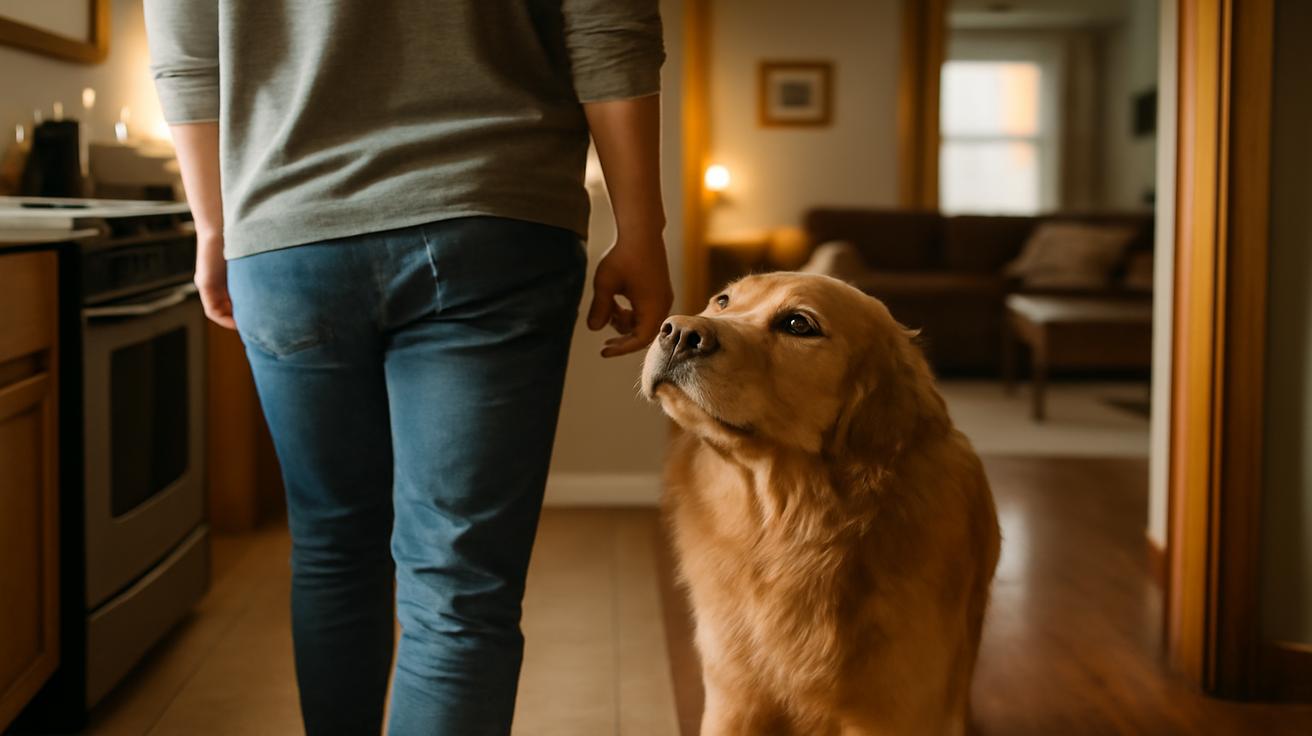
The telltale signs are unmistakable: soft paws padding across hardwood floors, the gentle clink of a collar tag, and the almost audible contentment of a dog positioned precisely at your feet. For countless pet owners, this constant shadowing has become the soundtrack of daily life. But what does it really mean when your canine companion refuses to let you out of their sight?


The Science Behind Canine Shadowing
Veterinary behaviorists and animal psychologists have spent considerable time studying what researchers call “shadowing” or “velcro dog” behavior. The phenomenon is far more complex than simple affection, though love certainly plays a role. When dogs follow their owners from room to room with unwavering consistency, they’re demonstrating a specific attachment pattern that has deep evolutionary roots.
Dogs are pack animals by nature, and this instinct hasn’t been bred out of them despite thousands of years of domestication. In wild canine packs, staying close to pack members served crucial survival functions. Younger or lower-ranking wolves would shadow higher-ranking members to learn hunting techniques, understand social hierarchies, and maintain group cohesion. Modern dogs carry these same genetic predispositions, even though the “hunting” they’re doing involves following their human from the kitchen to the bedroom.
Dr. Karen Overall, a renowned animal behaviorist, explains that dogs have evolved alongside humans for approximately 15,000 to 40,000 years. This co-evolution has created unique social bonding capabilities in dogs that surpass their wolf ancestors. The shadowing behavior represents the deepening of this bond—your dog has integrated you not just as a caregiver, but as their primary source of security and social structure.
Different Types of Following Behavior
Not all shadowing is created equal, and the context matters significantly when interpreting what your dog is trying to communicate. Understanding the nuances helps owners distinguish between healthy attachment and potential behavioral concerns.
Casual shadowing occurs when a dog simply prefers to be in the same room as their owner but maintains some independence. These dogs might lie on the couch while you work at a nearby desk, or follow you to the kitchen but remain calm and relaxed. This represents secure attachment and generally indicates a well-adjusted, confident dog.
Intense shadowing, by contrast, involves constant vigilance. The dog monitors your every movement, stands when you stand, and shows visible anxiety if you leave the room. Some dogs in this category will position themselves directly in your path or maintain eye contact while following. This behavior often signals either deep bonding or potential anxiety issues that warrant closer examination.
Situational following is context-dependent. Some dogs follow more intensely during storms, fireworks, or when visitors arrive. Others shadow their owners primarily during times of day when the household transitions—like early morning or evening. This type of behavior typically reflects specific triggers rather than generalized attachment patterns.
The Attachment Bond: A Sign of Deep Connection
In most cases, especially when shadowing behavior is relaxed and calm, following you everywhere is a compliment. It indicates your dog views you as a secure base—a concept psychologists borrowed from human child development research. Secure attachment figures provide safety, comfort, and predictability. Your dog following you suggests they believe you’re the best source of these essential needs.
This behavior peaks in certain breeds and individual dogs. Breeds historically developed to work closely with humans—like Spaniels, Retrievers, and German Shepherds—often display more intense shadowing than more independent breeds like Huskies or Akitas. However, individual temperament matters more than breed generalization. Some Huskies become devoted shadows while some Labs maintain impressive independence.
When your dog follows you with a soft expression, relaxed body language, and calm demeanor, they’re essentially saying, “You make me feel safe.” They’ve chosen you as their anchor in an unpredictable world. This represents successful bonding and suggests your dog trusts you completely.
When Shadowing Becomes Problematic
The distinction between healthy attachment and problematic behavior centers on anxiety level and the dog’s ability to function independently. If your dog becomes distressed when you’re out of sight—displaying destructive behavior, excessive vocalization, or house-training regression—they may be experiencing separation anxiety rather than simple preference for your company.
Separation anxiety manifests differently than secure attachment shadowing. Anxious dogs might follow you obsessively, pant excessively while shadowing, attempt to prevent you from leaving rooms, or show signs of panic when departure seems imminent. These dogs need behavioral intervention and sometimes medication to manage their anxiety effectively.
The difference is subtle but important. A secure dog that follows you everywhere will be fine when you close the bathroom door. An anxious dog will scratch at the door, whine, or show other distress signals. This distinction helps owners determine whether their dog’s behavior is a charming personality trait or a sign of underlying emotional distress.
Practical Insights for Dog Owners
If your dog is a devoted shadow and you’re concerned about their independence, there’s no need to force separation. Healthy shadowing doesn’t prevent dogs from developing confidence or engaging in solo activities. Many shadow dogs willingly spend time alone with toys or relaxing when given the choice, as long as they know their owner is accessible.
Supporting this behavior involves maintaining consistency in your routine, providing positive reinforcement for calm behavior, and ensuring your dog has enrichment activities available. Interactive toys, puzzle feeders, and regular exercise all contribute to a well-adjusted shadow dog.
If you’re dealing with anxiety-based shadowing, gradual desensitization to separation combined with positive association building can help. Starting with microseparations—closing a door for seconds and rewarding calm behavior—builds confidence gradually.
The Deeper Meaning
Ultimately, when your dog follows you everywhere, they’re offering a daily testament to trust. They’ve assessed their environment and decided you’re the safest place in it. Your presence reduces their stress, provides them with social cues, and makes them feel more secure in navigating the world.
This behavior, whether intense or casual, represents one of the most profound aspects of dog-human relationships. While we’ve trained dogs for specific tasks and bred them for particular traits, their fundamental desire remains unchanged: to be near us, to trust us, and to integrate themselves into our daily lives.
The next time you hear those soft paws following you down the hallway, pause to recognize what that sound represents—a bond forged through mutual trust, evolutionary history, and the simple human-canine connection that has defined both our species for millennia.










Leave a Comment