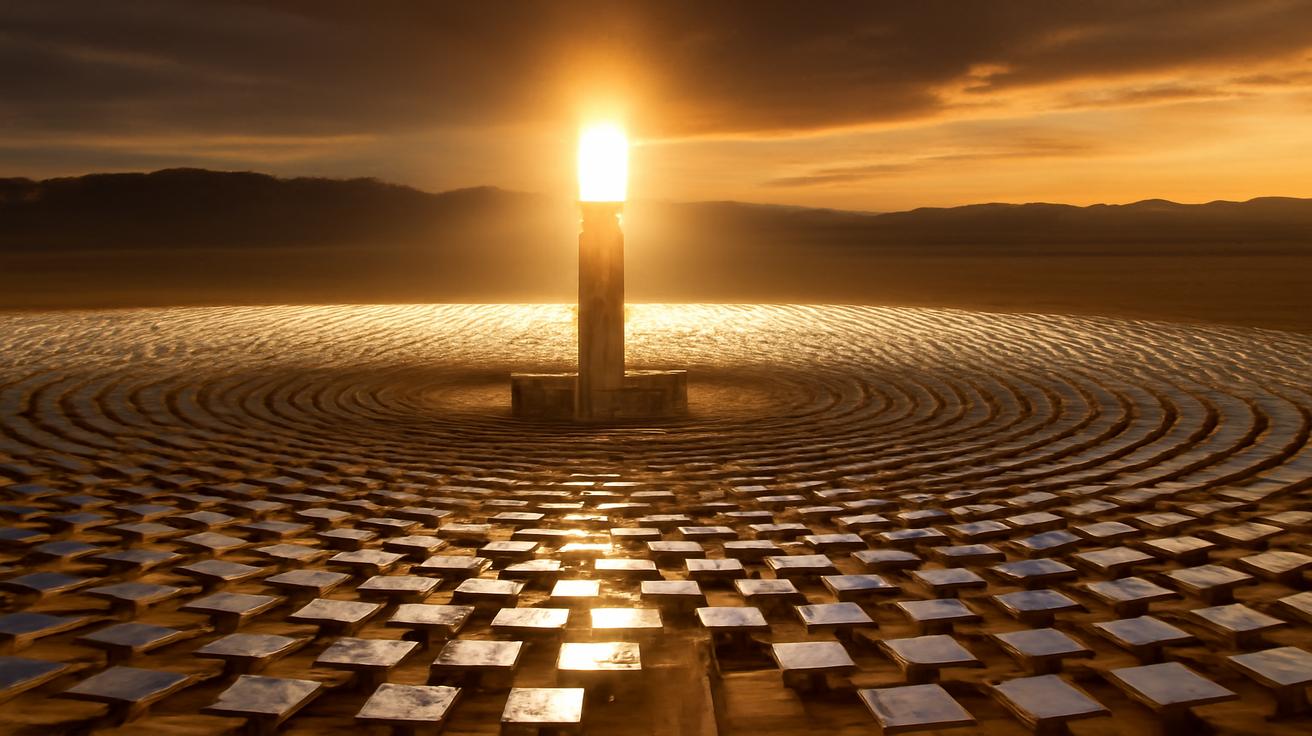
When the desert sun finally dips below the horizon and temperatures begin their nightly descent, most of the world retreats into darkness and rest. Yet beneath a canopy of brilliant stars, an extraordinary revolution continues its work. In remote desert regions across multiple continents, scientists and engineers are building what many are calling artificial suns—sophisticated systems designed to capture, concentrate, and store solar energy on an unprecedented scale. These installations promise to fundamentally transform how cities receive their power.


The Technology Behind the Artificial Sun
The concept of an artificial sun, while dramatic in name, refers to concentrated solar power (CSP) facilities that use advanced mirror technology to focus sunlight into intense thermal energy. Unlike traditional photovoltaic panels that convert sunlight directly into electricity, these systems operate on principles similar to how a magnifying glass concentrates rays of light to create heat.
The technology relies on thousands of precisely positioned mirrors, known as heliostats, which track the sun’s movement throughout the day. Each mirror reflects sunlight onto a central receiver tower, where temperatures can soar to over 1,000 degrees Celsius. This extreme heat is used to boil water or heat molten salt, creating steam that drives turbines and generates electricity. The brilliance of this approach lies not just in energy generation, but in energy storage capabilities that traditional solar methods struggle to provide.
Location Strategy: Why Deserts Are Ideal
Desert environments present the perfect conditions for these megaprojects. The cloudless skies that characterize most desert regions mean consistent, predictable sunlight throughout the year. Additionally, vast expanses of uninhabited land eliminate complex land-use complications that plague renewable energy projects in populated areas. The extreme heat during daytime hours, while challenging for human habitation, becomes a tremendous advantage for solar concentration technology.
Several major projects are currently underway across North Africa, the Middle East, and portions of the southwestern United States. The Noor Ouarzazate Solar Complex in Morocco represents one of the world’s most ambitious installations, capable of providing clean energy to over one million residents. Similarly, projects in Egypt, Saudi Arabia, and the United Arab Emirates are rapidly expanding, signaling a global shift toward desert-based renewable energy infrastructure.
Energy Storage: The Game-Changing Advantage
What distinguishes these artificial sun systems from conventional solar installations is their exceptional energy storage capability. By heating molten salt mixtures to extremely high temperatures, facilities can store thermal energy for extended periods. This stored heat can be converted to electricity even after sunset, addressing one of renewable energy’s most persistent challenges: the intermittency problem.
When the desert cools at night, thermal storage systems release their accumulated energy, keeping turbines spinning and electricity flowing to distant cities. Some facilities can maintain power generation for up to fifteen hours after sunset, transforming solar energy from an intermittent resource into a reliable baseload power source. This breakthrough has profound implications for grid stability and energy security.
Economic Impact and Job Creation
Construction and operation of these massive solar complexes have stimulated unprecedented economic activity in previously underdeveloped desert regions. Thousands of workers, from engineers and technicians to construction laborers, find employment in these megaprojects. Local economies benefit from infrastructure development, supply chain expansion, and the establishment of specialized manufacturing facilities.
The cost of concentrated solar power has declined dramatically over the past decade, making these projects increasingly economically competitive with fossil fuel generation. While initial capital investment remains substantial, the operational costs are minimal, and the technology promises fifty-year lifespans with minimal degradation.
Environmental Advantages Beyond Carbon Reduction
Beyond eliminating greenhouse gas emissions associated with fossil fuel power plants, artificial sun technology offers additional environmental benefits. These facilities require minimal water for operation compared to traditional thermal power plants, a crucial advantage in arid regions where water scarcity poses severe challenges. The land beneath the mirrors can remain productive, allowing for continued use by local ecosystems and livestock grazing in some installations.
The technology also eliminates air pollution that typically accompanies coal, natural gas, and oil-based power generation. Communities surrounding these facilities experience improved air quality and reduced health impacts from respiratory diseases linked to air pollution.
Technical Challenges and Ongoing Development
Despite remarkable progress, engineers continue addressing technical challenges. Mirror alignment precision requires constant calibration as dust and environmental factors affect reflective surfaces. Dust storms in desert regions necessitate regular cleaning protocols and maintenance schedules. Scientists are developing advanced coatings that resist dust accumulation and self-cleaning mechanisms that reduce maintenance requirements.
Heat transfer efficiency remains an active area of research, with engineers exploring alternative thermal fluids and improved receiver designs that capture more solar energy with minimal losses. Some facilities are experimenting with volumetric receivers packed with ceramic materials that absorb and retain heat more effectively than traditional designs.
Global Expansion and Future Projections
Energy analysts predict that concentrated solar power could supply up to 25 percent of global electricity by 2050 if current development trajectories continue. Multiple countries are committing substantial investment to desert-based renewable energy infrastructure as climate commitments intensify and fossil fuel costs fluctuate.
Australia’s massive solar projects, Chile’s Atacama Desert installations, and India’s emerging concentrated solar capacity indicate that this technology transcends geographic or cultural boundaries. International collaboration between nations sharing desert regions is fostering technology transfer and creating competitive advantages through shared innovation.
Powering Cities from Desert Energy
The practical pathway from desert generation to urban consumption involves sophisticated long-distance transmission infrastructure. High-voltage power lines carry electricity generated in remote desert facilities toward population centers thousands of kilometers away. Grid integration challenges that plagued earlier renewable projects are being overcome through advanced smart grid technologies and energy management systems.
Cities incorporating power from artificial sun facilities are reducing their carbon footprints while gaining energy independence from fossil fuel imports. This transformation extends beyond mere electricity provision—it represents a fundamental restructuring of how modern societies approach energy security and environmental responsibility.
Looking Forward: The Artificial Sun Era
As night falls across desert landscapes, the artificial suns continue their vital work, converting starlit evenings into productive energy generation periods through thermal storage systems. This technology exemplifies humanity’s capacity to harness natural forces creatively and sustainably.
The artificial sun projects emerging in deserts worldwide represent more than technological achievements—they symbolize a civilizational commitment to renewable energy and environmental stewardship. As these installations proliferate and improve, they will increasingly become the invisible backbone supporting modern urban life, demonstrating that even in barren deserts under brilliant stars, humanity can build the infrastructure for a sustainable future.











Leave a Comment