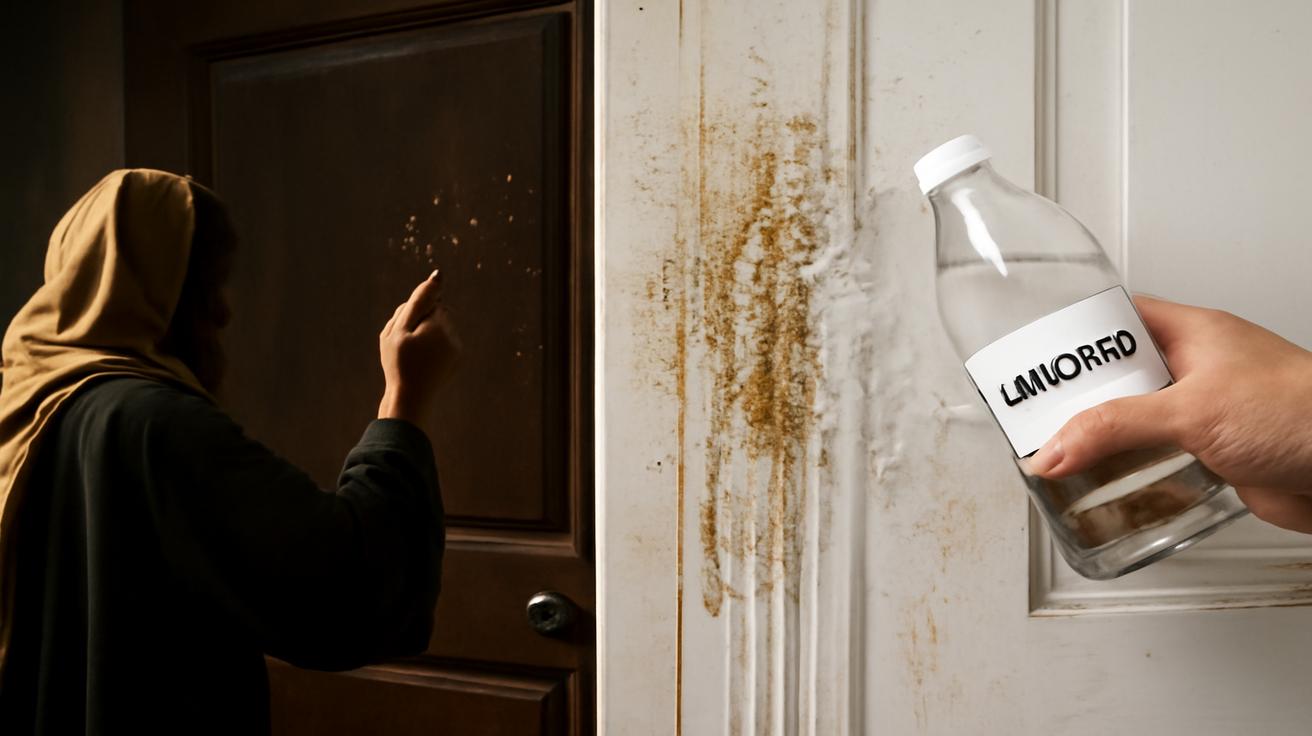
The pungent aroma of vinegar hits you instantly—sharp, acidic, almost electric in its intensity. For some homeowners, this distinctive smell represents something far more significant than a household cleaning agent. It’s a spiritual shield, a protective barrier against negativity and misfortune. Yet as this practice gains traction across social media platforms and community forums, scientists and household experts are stepping in with a different explanation for why vinegar has become a fixture on countless front doorsteps.


The Spiritual Narrative: Why People Believe in Vinegar’s Power
The concept of using vinegar as a spiritual cleanser isn’t new. Practitioners of various traditions—from folk magic to alternative wellness communities—have long credited acetic acid solutions with properties beyond the physical realm. According to believers, vinegar possesses the ability to neutralize negative vibrations, cleanse spaces of unwanted energy, and create an invisible protective boundary around homes.
This belief often intersects with feng shui principles, where practitioners suggest that vinegar can serve as an energetic purifier. Some claim that spraying the solution around doorways and windows creates a metaphysical filter, preventing harmful intentions and negative emotions from entering the home. The practice has gained particular popularity among individuals interested in crystal healing, energy work, and spiritual cleansing rituals.
On platforms like TikTok and Instagram, countless users have shared their testimonials about using vinegar sprays on front doors, attributing improved moods, better sleep, and reduced household conflict to the practice. These anecdotal accounts fuel interest, particularly among those seeking non-conventional wellness approaches.
Breaking Down the Scientific Perspective
While spiritual interpretations vary widely, scientific researchers and household experts offer a grounded alternative explanation for vinegar’s widespread use around doorways. The practical applications of vinegar are rooted in chemistry rather than metaphysics, though the results are nonetheless beneficial for homeowners.
Vinegar’s primary active component—acetic acid—functions as a natural antimicrobial agent. When sprayed on surfaces, particularly around entry points like doors and doorframes, it effectively eliminates bacteria, fungi, and various microorganisms. The effectiveness of vinegar as a disinfectant has been documented in multiple peer-reviewed studies, confirming its capability to reduce pathogenic organisms on household surfaces.
Dr. Margaret Chen, a microbiologist specializing in household environmental science, explains the mechanism: “Acetic acid denatures proteins in microbial cell walls, effectively killing them through a chemical process. What people interpret as ‘negative energy’ might actually be the psychological relief that comes from knowing their entry point is hygienically clean and protected from common pathogens.”
The Psychological Component: Why Belief Matters
Beyond its antimicrobial properties, vinegar spraying carries significant psychological weight. The ritual aspect of the practice cannot be dismissed, as numerous studies in health psychology demonstrate that ritualistic behaviors can produce measurable psychological benefits through the placebo effect.
When a homeowner performs a deliberate, purposeful action—such as spraying vinegar around their entryway—they’re engaging in what psychologists call “active coping.” This creates a sense of agency and control over one’s environment. Whether the mechanism is truly energetic or simply psychological, the mental benefits are genuine.
“The distinction between ‘spiritual’ and ‘psychological’ effects becomes blurry when we consider how our brains interpret our actions,” notes Dr. James Patterson, a behavioral psychologist. “If a practice makes someone feel safer and more grounded in their home, that emotional shift is real, regardless of the underlying mechanism.”
Practical Household Applications Experts Actually Endorse
Cleaning and household management professionals acknowledge vinegar’s legitimate utility in home maintenance, though they approach it from a practical rather than spiritual angle. The compound works effectively for several documented purposes:
First, vinegar serves as a natural antimicrobial spray, making it suitable for disinfecting high-touch surfaces like doorknobs, door handles, and the surrounding frame. This application is particularly relevant given increased awareness of surface-transmitted pathogens.
Second, vinegar can discourage certain pests. The strong odor repels insects and small animals that might otherwise attempt to nest near entry points. This isn’t about energy, but about disrupting the environmental cues these creatures use for navigation.
Third, vinegar is an economical and environmentally friendly alternative to harsh chemical cleaners. A mixture of vinegar and water costs pennies and avoids introducing toxic substances into indoor air quality.
The Market Response: Commercializing Ancient Wisdom
Recognizing the appeal of this trend, marketers have begun creating specialized products. Vinegar-based sprays marketed specifically for “energy cleansing” and “negative energy removal” now occupy shelf space in wellness stores, with price points significantly higher than standard household vinegar. These products capitalize on the spiritual narrative while delivering the same basic chemical composition.
This commercialization raises interesting questions about how consumer behavior intersects with belief systems. Whether someone purchases a $15 “spiritually formulated” vinegar spray or uses a $2 bottle of household vinegar, the actual chemical action remains identical.

Cultural Perspectives and Tradition
It’s worth noting that vinegar’s use in protective rituals spans multiple cultures and centuries. In some Asian traditions, vinegar has long been considered a purifying substance. Similarly, in certain European folk practices, vinegar played a role in cleansing ceremonies. These historical perspectives suggest that the practice emerged from observations about vinegar’s practical properties, which were later integrated into spiritual frameworks.
“What we’re seeing today is actually a modernized revival of practices with deep historical roots,” explains Dr. Elena Rodriguez, an anthropologist specializing in household rituals. “The cultural memory of vinegar’s usefulness was translated into spiritual language, and now we’re rediscovering the practical basis for those traditions.”
Navigating Between Belief and Evidence
The vinegar door phenomenon illustrates an important intersection in contemporary life: the space between spiritual belief and scientific understanding. Neither perspective needs to entirely invalidate the other. A homeowner can appreciate vinegar’s antimicrobial properties while also finding personal meaning in the ritualistic act of application.
Rather than dismissing vinegar spraying as mere superstition or claiming it as definitive proof of spiritual protection, a balanced perspective acknowledges multiple layers of truth. The practice offers measurable hygenic benefits, psychological reassurance, and connection to cultural traditions—all valuable outcomes regardless of one’s metaphysical beliefs.
Making Your Own Decision
For those considering incorporating vinegar into their home maintenance routine, the practical approach involves straightforward application. A solution of one part vinegar to three parts water can be sprayed on doorframes, handles, and surrounding areas. The benefits—antimicrobial protection and pest deterrence—are legitimate, while the spiritual interpretation remains a matter of personal belief.
As household practices continue evolving in the digital age, vinegar exemplifies how traditional knowledge, scientific understanding, and contemporary wellness culture can coexist. Whether you’re motivated by practical cleaning needs, spiritual curiosity, or simple tradition, the sharp scent of vinegar at your door represents something different to each person—and perhaps that personalized meaning is where the real power lies.










Leave a Comment