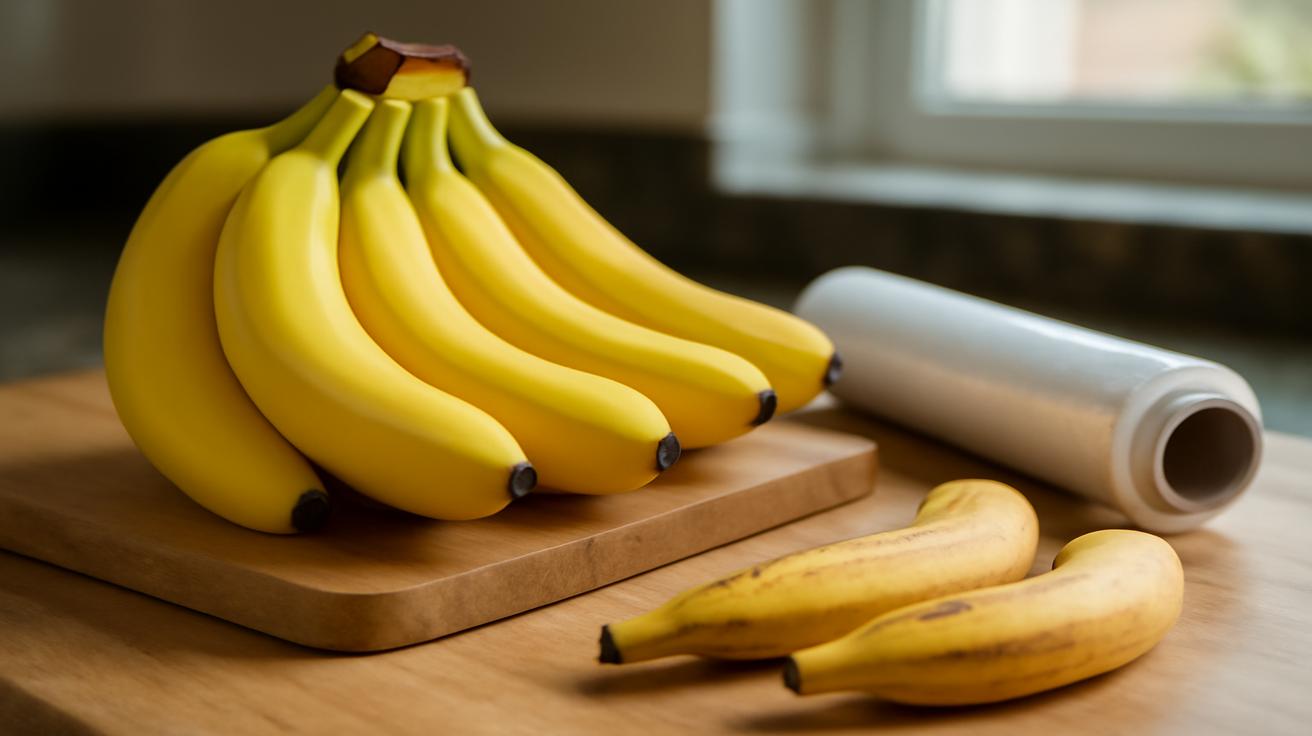
The struggle is real: you bring home a bunch of promising yellow bananas from the grocery store, and within days, they’ve transformed into brown-spotted relics destined for banana bread. But what if there was a simple, cost-effective solution hiding in your kitchen that could extend their lifespan by weeks? There is, and it’s backed by both practical experience and fruit science.


Understanding Why Bananas Brown So Quickly
Before we reveal the solution, it’s important to understand the enemy. Bananas don’t brown because of time alone—they brown because of a natural gas called ethylene. This compound is produced by bananas themselves as they ripen, which triggers a cascade of ripening processes that ultimately lead to the brown spots and soft texture we see.
The problem is that bananas release ethylene gas in increasing amounts as they mature, which accelerates the ripening process further. It’s a self-perpetuating cycle. When bananas are stored together, they amplify each other’s ethylene production, causing the entire bunch to ripen much faster than individual fruits would.
This is why your bananas seem to go from perfect to overripe overnight. They’re literally encouraging each other to ripen faster through their shared ethylene emissions.
The Household Item That Changes Everything
The surprising solution to this problem is as simple as wrapping your banana bunch with plastic wrap. While this might seem too straightforward to be true, the science supports it completely.
When you wrap your bananas—particularly around the crown where they’re connected—you create a barrier that traps the ethylene gas being released by the fruit itself. This prevents the gas from reaching other bananas in the bunch, which interrupts the rapid ripening cycle. The ethylene has nowhere to go and accumulates in a contained space rather than spreading throughout your kitchen or the fruit itself.
This single action has been proven to extend banana freshness from the typical four to five days to a remarkable two weeks or more, depending on your storage conditions.
The Optimal Application Method
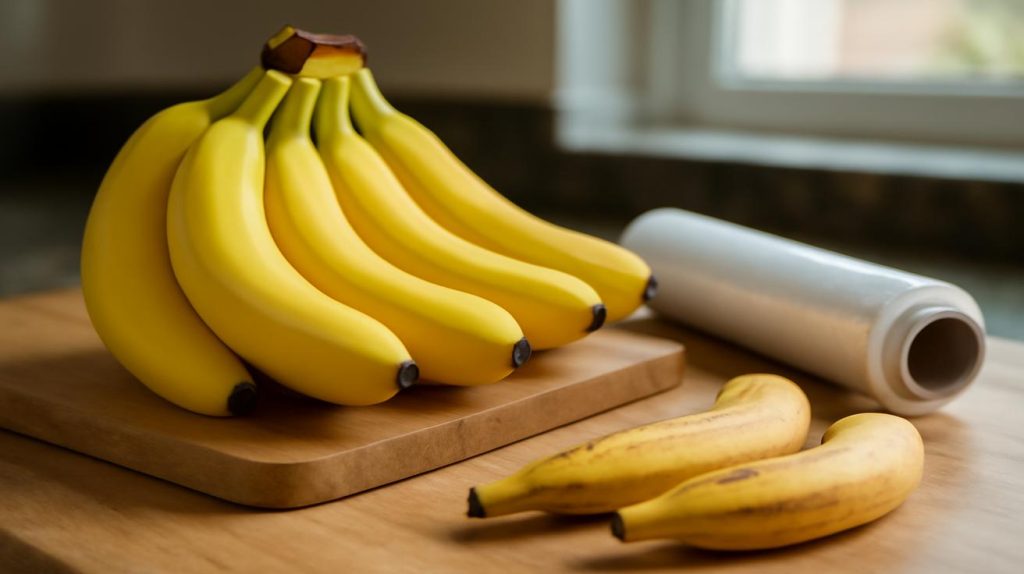
Simply wrapping your entire bunch in plastic wrap won’t yield the best results. Instead, separate your bananas into individual fruits or small groups of two or three. Then, wrap plastic wrap tightly around the crown—the stem area where the bananas connect.
The crown is the critical zone because this is where ethylene concentrations are highest. By isolating this area, you prevent the hormone from diffusing into the surrounding fruit. You don’t need expensive plastic wrap; any standard kitchen plastic wrap works perfectly well.
Another variation involves wrapping the crown with aluminum foil, which some researchers and kitchen enthusiasts claim works equally well or better. The theory is similar: blocking ethylene production from spreading. Both methods have devoted followers who swear by their effectiveness.
Storage Location Matters Too
While the plastic wrap hack is transformative, where you store your bananas makes a difference as well. Temperature plays a significant role in fruit ripening. Bananas kept at room temperature will ripen faster than those stored in cooler environments.
The ideal storage spot is somewhere cool but not cold. Your refrigerator might seem logical, but banana peels will darken in cold temperatures even though the fruit inside remains fresh and firm. This is purely a cosmetic issue—the banana is perfectly fine—but it defeats the purpose of keeping them looking appetizing.
A basement, cool pantry, or even a kitchen cupboard away from direct sunlight provides the sweet spot for banana storage. If you must use a refrigerator, keep them there but understand that the peel discoloration is unavoidable, even if the fruit quality remains excellent.
The Science of Ethylene Control
Plant scientists have long understood ethylene’s role in fruit ripening, which is why this method works so reliably. Ethylene is a plant hormone that triggers a series of biochemical changes including increased respiration, breakdown of chlorophyll (which causes the yellow color to develop), and conversion of starches to sugars.
By limiting ethylene’s spread through plastic barriers, you’re essentially putting the ripening process into slow motion. The fruit still matures, but at a fraction of the normal pace. This is the same principle used in commercial fruit storage facilities, where controlled atmosphere chambers limit ethylene exposure to keep produce fresh for months.
Your kitchen plastic wrap isn’t as sophisticated as industrial equipment, but it operates on identical principles.
Real-World Results and Testing
Home kitchen testers across the globe have documented remarkable results with this method. Many people report that wrapped bananas maintain their optimal eating quality for ten to fourteen days without developing significant brown spotting.
Some users have even experimented with separating individual bananas and wrapping each one separately, reporting that bananas can remain almost pristine for up to three weeks. The trade-off is convenience—separated bananas take up more space and require more plastic wrap.
Others have found success combining the plastic wrap method with refrigeration, placing wrapped banana bunches in the crisper drawer. While the peels darken, the fruit itself remains in excellent condition for extended periods.
Additional Tips for Maximum Freshness
Combine the plastic wrap method with a few other strategies for even better results. Never store bananas near other ethylene-producing fruits like apples or avocados. These fruits amplify the ripening effect.
Keep bananas away from direct sunlight and heat sources like windowsills or stovetops. Even wrapped, exposure to warm temperatures will accelerate ripening.
Consider buying bananas at different ripeness levels. While you wrap the yellow ones, keep slightly green bananas separate and unwrapped. As the wrapped bunch plateaus in ripeness, you’ll have naturally ripened bananas ready to eat.
Why This Hack Matters
Beyond the satisfaction of extending food freshness, this hack has real economic implications. Food waste costs average households hundreds of dollars annually. Bananas, being inexpensive but often wasted, represent a surprising opportunity for savings.
Keeping bananas fresh longer also means you’re more likely to eat them, gaining their nutritional benefits rather than throwing them away. Bananas provide potassium, vitamin B6, vitamin C, and dietary fiber—nutrients many people fall short on.
Putting It Into Practice
The beauty of this hack is its simplicity. Next time you buy bananas, grab your plastic wrap before putting them away. Spend thirty seconds wrapping the crown, place them in a cool spot, and forget about them.
Within days, you’ll notice your bananas remain yellow while you’d typically expect browning. By the end of two weeks, you’ll likely still have edible bananas when previous purchases would have been composted weeks earlier.
This humble trick, requiring nothing more than household items already in most kitchens, has the power to transform how you store fruit and reduce food waste. Sometimes the best solutions to everyday problems are the simplest ones.










Leave a Comment