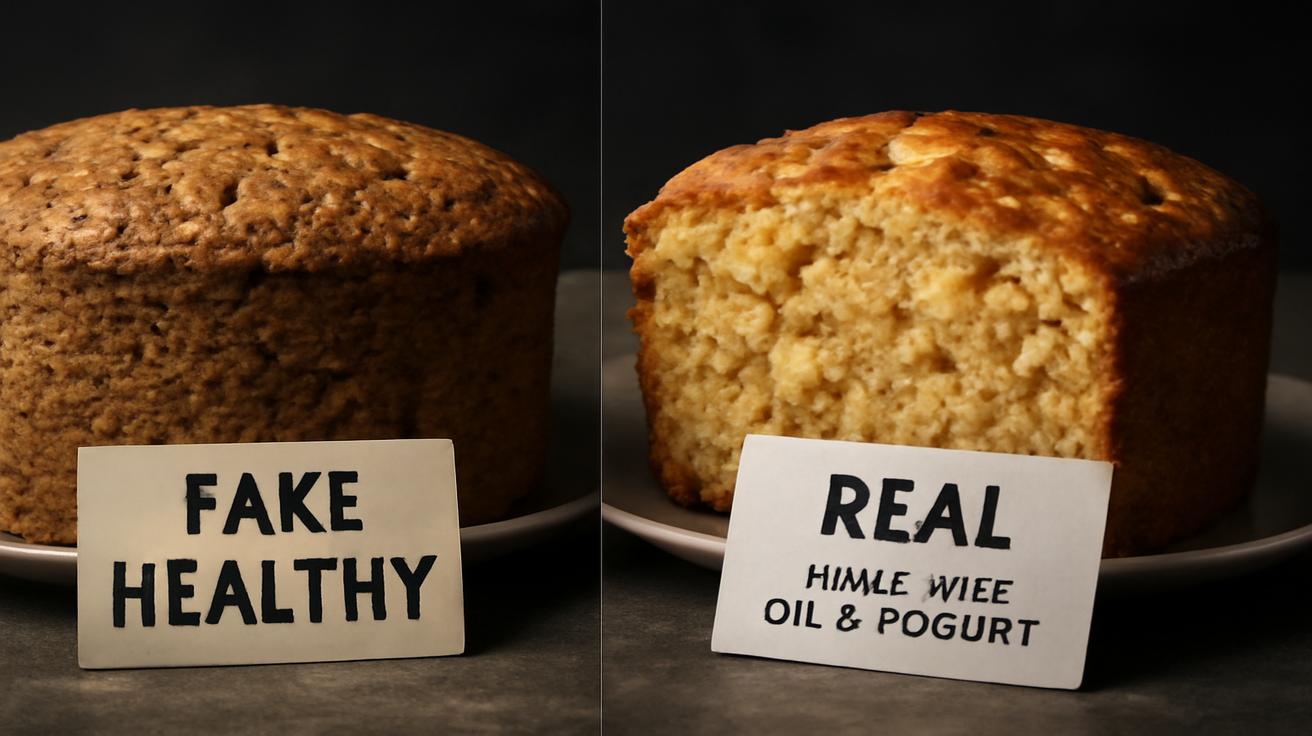
On gray afternoons when the craving for something warm and comforting strikes, many reach for what the health and wellness industry promises: guilt-free desserts that taste indulgent while maintaining nutritional integrity. A simple oil and yogurt cake, assembled in minutes with basic ingredients, tells a different story entirely—one that exposes the uncomfortable gap between marketing narratives and kitchen reality.


The Afternoon That Changed Everything
The quiet of a cloudy afternoon provides the perfect backdrop for culinary honesty. A bowl sits waiting. A whisk rests nearby. A bottle of neutral oil stands ready alongside a container of yogurt. These humble components form the foundation of what the food industry has repackaged, rebranded, and resold to consumers as part of a multi-billion-dollar healthy dessert movement. Yet when assembled without pretense in a home kitchen, they reveal something manufacturers would prefer to keep hidden.
This simple cake requires no elaborate equipment, no specialty ingredients sourced from boutique suppliers, no complex techniques requiring culinary school certification. The straightforward process—mixing wet and dry components, combining them with minimal fuss, and baking until golden—stands in stark contrast to the elaborate marketing machinery that surrounds dessert products marketed as “healthy” or “guilt-free.”
Understanding the Ingredients That Changed Baking
The substitution of oil for traditional butter and the addition of yogurt represented genuine innovations in home baking during the late twentieth century. These weren’t arbitrary changes but practical solutions to legitimate challenges: achieving moisture without excess density, reducing saturated fat content, and creating tender crumbs through chemical interactions between acidic yogurt and alkaline baking soda.
What began as functional improvements to cake structure evolved into marketing gold. The food industry recognized an opportunity. If consumers could be convinced that cakes made with oil and yogurt were inherently “healthier,” entire product categories could command premium pricing. Supermarket shelves began filling with commercially produced versions featuring health halos—organic certifications, non-GMO labels, added probiotics, superfood inclusions—all commanding prices double or triple that of conventional alternatives.
The Marketing Machinery Behind “Clean” Desserts
The contemporary healthy dessert industry operates on a principle of strategic omission and selective transparency. A product labeled “made with Greek yogurt” technically contains yogurt while potentially including twenty additional ingredients designed to extend shelf life, enhance sweetness, improve texture, and create visual appeal. Consumers reading such labels often make unconscious assumptions that if one ingredient is “clean” or “healthy,” the entire product must be similarly virtuous.
This psychological mechanism has proven remarkably profitable. Market research indicates consumers willingly pay significant premiums for products featuring health-adjacent language. Words like “natural,” “wholesome,” “clean,” and “guilt-free” trigger purchasing decisions before nutritional analysis occurs. A commercial yogurt cake might contain more total sugar than its conventional counterpart, yet the presence of yogurt in the ingredient list triggers mental associations with health and wellness.
What Actually Happens in Your Kitchen
The homemade version tells an unvarnished truth. When you personally measure oil—whether two-thirds of a cup or some other amount—you confront direct accountability for fat content. When you add sugar to your mixing bowl, you observe exactly how much sweetness you’re introducing. There’s no marketing narrative to obscure the reality that this cake, however light and moist it may be, remains fundamentally a dessert containing significant quantities of both fat and sugar.
This transparency represents the uncomfortable truth the commercial food industry prefers consumers avoid. A home baker understands intuitively that oil and yogurt cake is an occasional treat, not a dietary staple. The ingredients themselves make this obvious. Yet commercial marketing works tirelessly to reposition such treats as daily options, lifestyle choices, or even components of weight management strategies.
The Nutritional Reality Check
Analysis of standard oil and yogurt cake recipes reveals typically 200-300 calories per standard serving, with 8-12 grams of fat and 25-35 grams of carbohydrates, much of which comes from added sugars. These numbers place such cakes in the dessert category—not particularly different from traditional butter-based cakes when considered purely from a caloric and macronutrient perspective.
Yet supermarket versions marketed as “health-conscious” alternatives often contain similar or identical nutritional profiles while commanding premium pricing. The distinction lies not in actual nutritional content but in perception manipulation. A cake containing yogurt powder and marketed with wellness language sells for substantially more than nutritionally equivalent traditional cakes.
Why Simplicity Exposes Industry Deception
The brilliance of the simple homemade approach lies in its inability to hide behind marketing. You cannot trick yourself about what you’re consuming when you’ve personally combined the ingredients. The oil remains visibly oil. The sugar remains indisputably sugar. The yogurt provides genuine moisture and tang but doesn’t magically transform the preparation into something substantially different from other desserts.
This directness represents a form of consumer rebellion against the industrial food system’s narrative manipulation. When home bakers create oil and yogurt cakes without marketing pretense, they implicitly reject the framing that desserts require elaborate health justification to be acceptable. A dessert can simply be a dessert—occasionally enjoyed, mindfully consumed, and honestly acknowledged for what it is.
The Emerging Consumer Consciousness
Growing numbers of consumers recognize the pattern underlying healthy dessert marketing. The same ingredient-focused language used to justify premium pricing has become a red flag signaling potential deception. Awareness of greenwashing and health-washing in the food industry continues expanding, particularly among younger demographics accustomed to investigative food journalism and transparent supply chain documentation.
This shift poses genuine challenges to the premium healthy dessert sector. If consumers understand that an oil and yogurt cake—whether homemade or commercial—serves the same basic function as traditional desserts, the justification for charging twice as much evaporates. The industry responds by introducing increasingly elaborate health narratives: adaptogenic ingredients, prebiotics, amino acid profiles, functional benefits.
Finding Honest Ground in Modern Eating
The fundamental insight that a quiet afternoon and a simple cake provide concerns honesty in food choices. Desserts deserve space in balanced diets not because they can be marketed as health foods but because enjoyment and satisfaction matter. An oil and yogurt cake, made with intention and consumed without guilt, represents a more honest approach than premium commercial products requiring elaborate justification.
The uncomfortable truth the food industry would prefer consumers ignore is straightforward: there is no genuinely “healthy” dessert in the way marketing suggests. There are thoughtfully prepared desserts consumed in appropriate portions, appreciated for their genuine qualities, and acknowledged as treats rather than nutritional solutions. The oil and yogurt cake succeeds not by claiming health benefits but by delivering actual pleasure without pretense.
Moving Forward With Clarity
As consumers increasingly scrutinize food marketing and demand transparency, the gap between commercial messaging and nutritional reality becomes increasingly untenable. The simple oil and yogurt cake, created on a gray afternoon with humble ingredients, offers a template for more honest eating: direct acknowledgment of what we’re consuming, appreciation for genuine taste and texture, and rejection of unnecessary marketing narratives. In doing so, it reveals not failure of the dessert itself, but the uncomfortable truth about an industry built on selling consumers versions of honesty they actually already possessed.











Leave a Comment