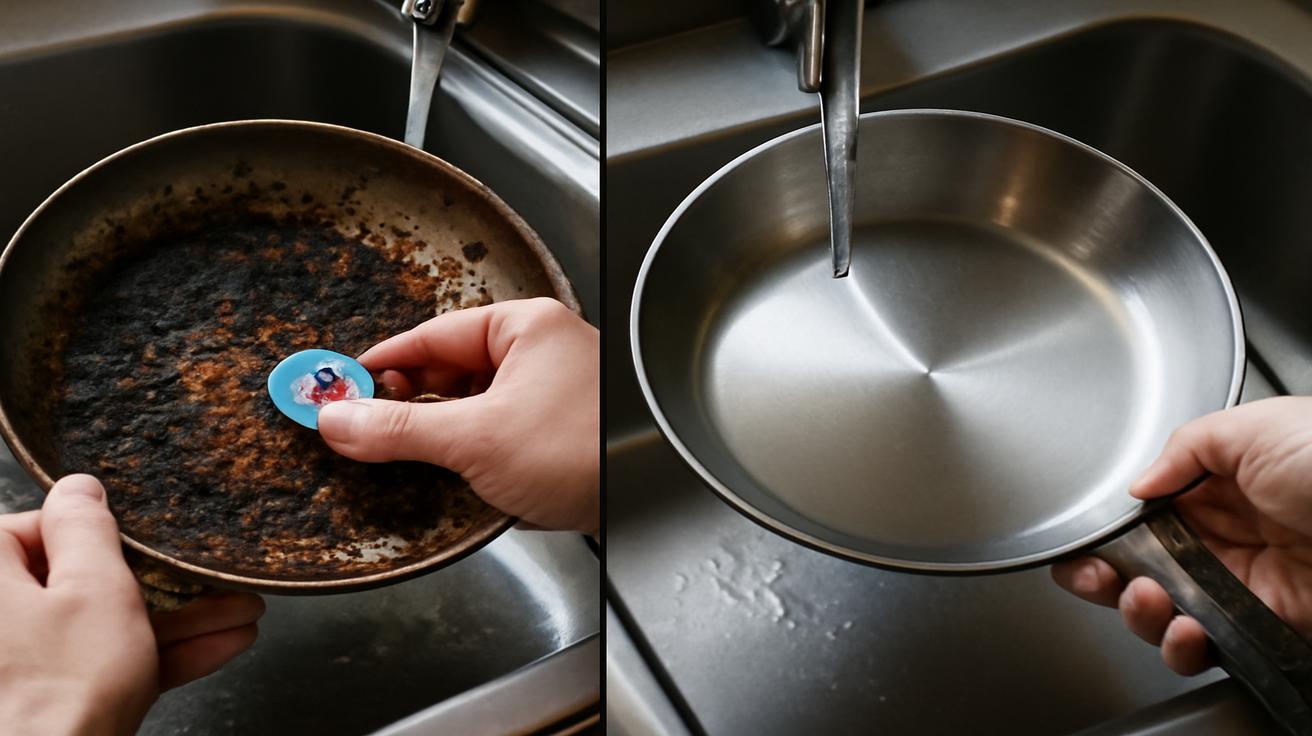
The kitchen falls silent after dinner service ends, and you’re left staring at a pan that looks like it’s been through a battle. Darkened, charred grease clings stubbornly to the surface, mocking every attempt at scrubbing. For years, home cooks have reached for the familiar duo of baking soda and vinegar, hoping their fizzing action would magically restore cookware to its former glory. But what if there’s a better way—one that requires minimal effort and delivers superior results?


Why Traditional Methods Fall Short
The baking soda and vinegar combination has earned its place in the kitchen cleaning hall of fame, largely due to social media virality and generational word-of-mouth recommendations. When combined, these two substances create a fizzing reaction that feels productive and satisfying to watch. However, the reality is far less impressive than the visual spectacle.
Baking soda, while mildly abrasive, requires significant elbow grease to be effective on heavily burnt surfaces. The vinegar’s acidity helps break down some mineral deposits and light grease, but together they lack the chemical strength needed to tackle baked-on, caramelized food residue that has bonded to metal at high temperatures. Home cooks often find themselves scrubbing for ten, fifteen, or even twenty minutes with this method, only to end up with partially cleaned pans and exhausted arms.
The problem intensifies when dealing with non-stick cookware, where aggressive scrubbing can damage the coating. Traditional abrasive methods pose a genuine risk to your most delicate kitchen tools, making the search for a gentler yet more effective solution increasingly urgent.
The Surprising Solution That Actually Works
Enter dishwasher tablets—the unsung hero of rapid grease removal that remains virtually unknown in most home kitchens. These compact powerhouses contain concentrated enzymes and surfactants specifically formulated to dissolve grease and burnt-on food at temperatures far lower than what your dishwasher typically reaches.
The magic lies in the tablet’s composition. Manufacturers engineer these tablets to break down grease molecules at their chemical level, rather than simply abrading them away. When dissolved in hot water, the active ingredients create an environment where burnt grease loses its grip on cookware almost immediately.
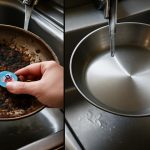
The process is surprisingly straightforward. Fill your problem pan with hot water and drop in a single dishwasher tablet. Let it sit for five to ten minutes while the tablet dissolves and the solution penetrates the burnt residue. What happens next is remarkable—the grease begins releasing from the pan’s surface almost spontaneously. A gentle wipe with a soft cloth or sponge completes the job, often without requiring any real scrubbing whatsoever.
How This Method Compares to Common Alternatives
Comparison testing reveals the dramatic difference between this approach and traditional methods. A pan with equivalent burnt grease deposits cleaned with baking soda and vinegar typically requires eight to twelve minutes of active scrubbing. The same pan treated with a dishwasher tablet solution is clean in under three minutes of minimal effort.
The cost factor also favors this unconventional approach. A single dishwasher tablet costs significantly less than the combined expense of multiple boxes of baking soda and vinegar bottles purchased for cleaning purposes. Most households already maintain a supply, eliminating the need for additional purchases.
Safety considerations further distinguish this method. Dishwasher tablets are formulated for regular contact with items meant to hold food, meeting stringent safety standards. The residual chemical presence after rinsing falls well within acceptable parameters, making this method safe for all cookware types, including those used for preparing meals for children and elderly family members.
Practical Application for Different Pan Types
Stainless steel cookware responds particularly well to this treatment. The tablet solution cuts through years of accumulated burnt grease without creating the streaks or discoloration that sometimes accompanies more aggressive chemical cleaners. Cast iron pans benefit equally, with the non-abrasive nature of the solution preserving the seasoning layer that makes these heirloom pieces so valuable.
Non-stick cookware—perhaps the most challenging surface to clean without causing damage—receives gentle treatment from this method. The absence of scrubbing action means zero risk to the delicate coating that keeps eggs sliding effortlessly across the surface and prevents food from sticking during cooking.
Even aluminum and copper cookware handle the tablet solution admirably. The mild chemical action doesn’t cause the discoloration or etching that harsher alternatives might produce, keeping your entire cookware collection looking newer for longer.
The Chemistry Behind the Effectiveness
Understanding why this method works so effectively requires examining the chemistry involved. Dishwasher tablets contain proteases, lipases, and amylases—enzymes that specifically target proteins, fats, and starches respectively. Burnt grease is fundamentally a combination of oxidized fats and caramelized carbohydrates fused to the pan’s surface.
When these enzymes encounter burnt residue in the presence of hot water, they break down the chemical bonds holding the mess to the metal. This enzymatic action operates at a molecular level, dismantling the problem from within rather than chipping away at it from without. The surfactants in the tablet further assist by reducing the surface tension of the water, allowing the solution to penetrate more effectively into crevices and textured areas where burnt food often accumulates.
Tips for Maximizing Results
Water temperature matters significantly for optimal results. The hotter the water, the faster the tablet dissolves and the quicker the enzymes activate. Boiling water accelerates the process considerably, though even warm tap water produces impressive results.
For extremely stubborn residue, allowing the tablet solution to work for fifteen to twenty minutes transforms nearly impossible cleaning jobs into manageable tasks. Patience replaces perspiration in this equation, making it ideal for people with limited physical strength or mobility issues.
Multiple tablets may be necessary for heavily burnt pans or larger cooking surfaces. Don’t hesitate to use two tablets for particularly challenging situations—the cost remains minimal while the effort expended drops to nearly zero.
Why This Method Remains Underutilized
The primary reason this effective cleaning solution hasn’t achieved mainstream recognition stems from simple tradition. Established cleaning myths perpetuate through generations, while innovative applications of existing products remain overlooked. Marketing hasn’t pushed dishwasher tablets as pan-cleaning solutions, so the average person never considers this application.
Additionally, there’s something psychologically satisfying about the baking soda and vinegar combination—the visible fizzing action provides perceived progress. The quiet effectiveness of the tablet method, while superior in actual results, lacks that theatrical demonstration that makes people feel like something productive is happening.
Moving Beyond Burnt Pan Emergencies
Prevention remains the ultimate strategy for avoiding burnt grease accumulation. Using appropriate heat levels, adding adequate cooking fat, and avoiding extended periods at high temperatures prevent most burning situations. However, accidents happen in even the most carefully managed kitchens, and knowing an effective solution eliminates stress when they do.
The discovery of this alternative cleaning method represents a broader truth about household management: effective solutions often hide in plain sight, overlooked because we’ve become accustomed to accepting less convenient approaches. Sometimes the best answer isn’t the most talked-about one—it’s simply the one that works.







Leave a Comment