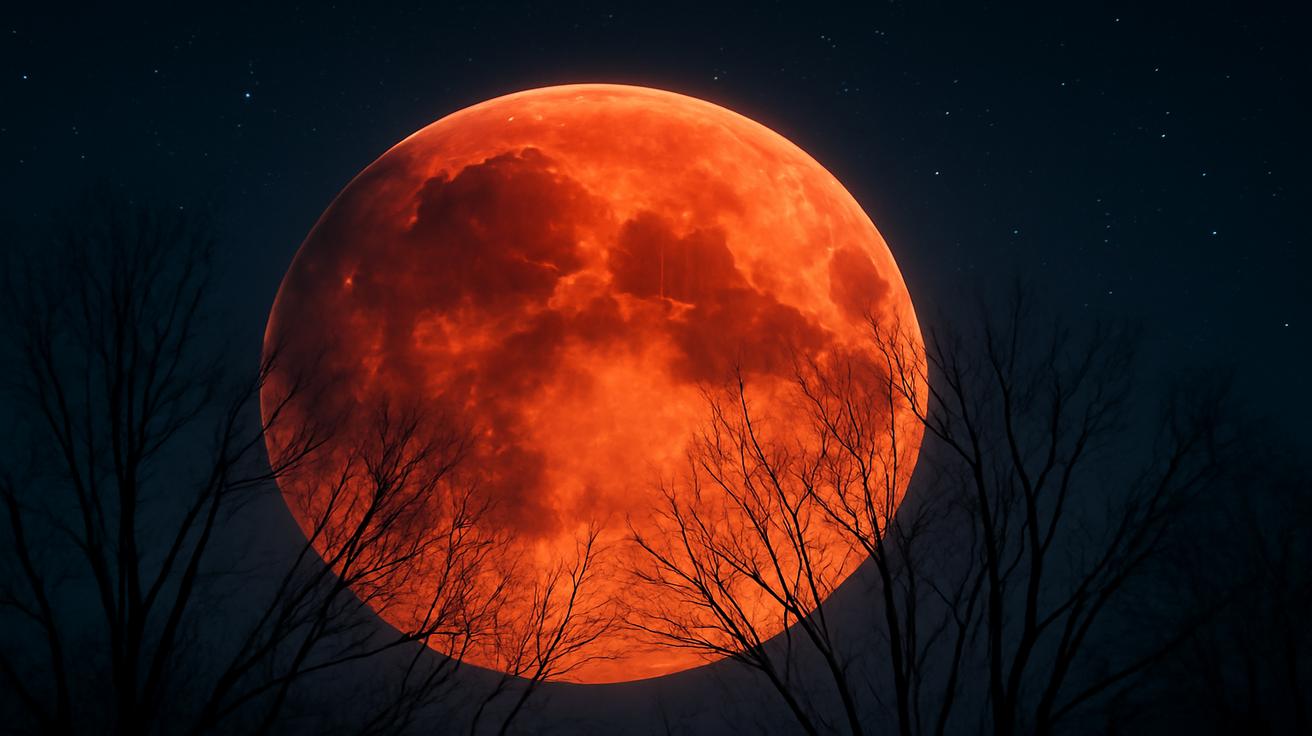
As winter’s grip loosens and spring approaches, stargazers and casual observers alike will have reason to look upward during the first week of March. A lunar eclipse will paint the night sky with an otherworldly crimson hue, transforming our celestial companion into a blood-red beacon visible from much of the globe. This astronomical event, occurring during the full moon phase, represents a convergence of orbital mechanics that happens only a handful of times each year.

Understanding the Lunar Eclipse Phenomenon
A lunar eclipse occurs through a straightforward yet spectacular alignment of three celestial bodies. When the full moon travels through Earth’s shadow, observers on our planet witness a gradual darkening of the lunar surface. Unlike solar eclipses, which require specific geographic positioning to observe totality, lunar eclipses remain visible from anywhere on Earth’s night side—making them more accessible to the general population.
The mechanics behind this event involve Earth’s position relative to the sun and moon. As our planet orbits between these two bodies, its shadow extends into space, creating a cone-shaped region where sunlight cannot reach. The moon, following its monthly orbit around Earth, periodically passes through this shadowed zone. When it does, we witness the distinctive reddening that makes lunar eclipses so captivating to observers.
The path the moon traces during these events follows a predictable pattern based on the orbital inclination of the lunar plane relative to Earth’s orbit around the sun. This geometric relationship ensures that eclipse seasons occur roughly every six months, though not every full moon creates an eclipse. The specific alignment required makes these events precious moments in our astronomical calendar.
Why the Moon Turns Red During Totality
The transformation of the moon’s color during a total lunar eclipse reveals fascinating principles of physics and atmospheric science. When the moon enters Earth’s umbra—the darkest part of our planet’s shadow—sunlight still reaches the lunar surface, but in an indirect manner. This light passes through Earth’s atmosphere, where it undergoes refraction.
As sunlight enters Earth’s atmosphere, it bends and filters through our air. The atmosphere scatters shorter wavelengths of light, such as blue and violet, while allowing longer wavelengths—particularly red and orange tones—to pass through. This same phenomenon causes our sunset skies to display brilliant reds and oranges. During a lunar eclipse, this same process bathes the moon in reddish light, creating the dramatic effect observers find so mesmerizing.
The precise shade of red the moon displays during any given eclipse depends on atmospheric conditions on Earth. Volcanic eruptions that inject ash and particles into the upper atmosphere can intensify the reddening effect, making the moon appear darker or more intensely crimson. Conversely, a clearer atmosphere may result in a brighter, more orange-tinted moon. This variability means no two lunar eclipses look exactly identical, adding to their unique appeal.
Observing the March Eclipse Event
For observers planning to witness the early March eclipse, preparation centers primarily on timing and location rather than equipment. Unlike solar eclipses, lunar eclipses present no danger to the human eye and require no special optical devices. A clear night sky, patience, and ideally binoculars or a telescope to enhance details constitute the necessary components for observation.
The night of the eclipse will carry that distinctive late-winter atmosphere—the kind of cold that makes breath visible in the darkness, where stars seem sharper and more defined against the black sky. This seasonal setting adds an almost mystical quality to the proceedings. Observers should plan to bundle up adequately, as eclipse watching requires extended outdoor time, and early March temperatures in most northern hemispheric locations remain chilly even as days gradually lengthen.
Timing varies depending on geographic location, as different parts of the world experience different phases of the eclipse at different moments. Those in regions with favorable positioning will witness the entire progression from the moment the moon first enters Earth’s penumbra through the dramatic totality phase to the final exit from shadow. Others may see only partial stages of the event depending on their local night and day cycle.
The Broader Context of Eclipse Seasons
Lunar eclipses cluster into eclipse seasons that occur approximately every 173 days as Earth, the sun, and moon align along a consistent plane. The March eclipse represents one node in this recurring cycle. Understanding this pattern helps explain why eclipse enthusiasts can anticipate these events years in advance with precise accuracy.
The ancient astronomers who first predicted eclipses without modern technology discovered this cyclical pattern, known as the Saros cycle. This 18-year period sees similar eclipses repeat with comparable characteristics, though shifted in geographic location. Modern astronomical predictions build upon these fundamental insights, enhanced by contemporary understanding of orbital mechanics and gravitational physics.
Preparing for Optimal Viewing
Successful eclipse observation requires minimal special equipment but benefits from thoughtful planning. Find a location with minimal light pollution—away from city glow and artificial lighting. National parks, rural areas, and designated dark-sky reserves offer ideal vantage points. If traveling to these locations proves impractical, even urban observers can often see a dramatic eclipse through the haze of city lights.
Bring warm clothing in layers, allowing adjustment as the night progresses. A comfortable chair or blanket enables extended viewing without physical strain. Binoculars enhance the view significantly, revealing surface details normally invisible to the naked eye, though they remain entirely optional. A smartphone or camera can capture the event, though don’t allow photography to overshadow the direct observation experience.
Consider setting phone reminders for eclipse timings specific to your location. Various astronomy apps provide countdown timers and progression maps showing the eclipse as it unfolds. Having companions to share the experience often enhances the event—watching celestial mechanics in action together creates memorable moments that resonate longer than solitary observation.
The Broader Appeal of Lunar Events
Lunar eclipses uniquely bridge casual interest and serious astronomy. While dedicated astronomers relish the opportunity to document and analyze the eclipse, casual observers appreciate the raw beauty and wonder of witnessing our place in the cosmos. Children seeing their first red moon often develop lifelong interests in science and space exploration. Photographers chase the perfect image. Poets find inspiration in the rare nocturnal drama.
This early March eclipse represents an opportunity to pause amid daily routines and reconnect with the celestial mechanics that govern our planet. It reminds us that despite technological advancement and urban development, we remain inhabitants of a cosmos operating according to immutable physical laws, creating moments of genuine wonder that no screen can replicate.
As the cold night air sharpens your senses and the moon transitions through its remarkable transformation, take time to appreciate the alignment of orbital mechanics that makes such events possible. The early March full moon’s shift into deep red tones offers a humbling reminder of Earth’s place in our solar system and our privilege as observers of these silent, ancient celestial dances.










Leave a Comment