For days, the question hung in the air unanswered. Were Australian defence personnel aboard US military vessels involved in the Iran conflict? The government deflected. It cited operational security. Foreign Minister Penny Wong told Senate estimates the activities of US submarines were “a matter for the United States.”
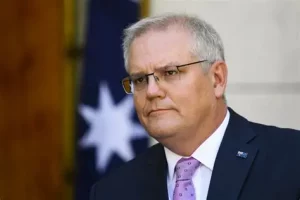
Then, on Friday morning, Prime Minister Anthony Albanese picked up the phone and confirmed it directly to Sky News. Three Australian defence personnel had been aboard the American fast-attack submarine that torpedoed and sank the Iranian Navy frigate IRIS Dena in the Indian Ocean. They were not involved in the attack itself, Albanese said. But they were there. And with that, a question many Australians had been quietly asking all week became very loud indeed.
What exactly does AUKUS mean in practice? And what does it mean for Australia when an allied vessel carrying Australian sailors fires a torpedo in a war that the Australian government says it is not part of?
What happened to the IRIS Dena
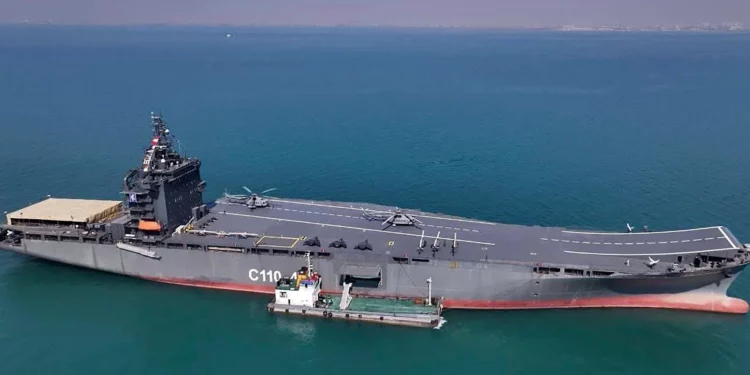
The IRIS Dena was an Iranian Navy frigate returning home from a multilateral naval exercise hosted by India in the Bay of Bengal. The exercise, which included vessels from India and several other nations, had concluded in late February. The IRIS Dena was making its way back westward through the Indian Ocean when it was struck.
A US Navy fast-attack submarine fired a torpedo that struck and sank the vessel — the first time an American submarine has sunk an enemy ship with a torpedo since World War Two. The attack took place in international waters off the southern coast of Sri Lanka. Sri Lankan authorities recovered 87 bodies from the sea in the days that followed. Thirty-two survivors were brought to the National Hospital in the port city of Galle and treated for their injuries.
The sinking drew immediate international reaction. India, which had just concluded joint naval exercises with the IRIS Dena, expressed deep concern and called for a full accounting of the circumstances. The attack marked a dramatic escalation of the US-Iran war from its primary theatre in the Middle East into the Indo-Pacific region — raising questions about where, exactly, the boundaries of this conflict end.
Why were Australian sailors on a US submarine?
The answer sits at the heart of what AUKUS is and what Australia agreed to when it signed the trilateral security pact with the United States and the United Kingdom in 2021.
Under the AUKUS pathway, Australia will eventually receive nuclear-powered submarines — initially US Virginia-class boats, and later a new class being developed jointly with the UK. But building and operating nuclear-powered submarines requires an entirely new level of technical capability within Australia’s Navy. Sailors need to learn how to operate reactors. Officers need to understand the tactical realities of nuclear submarine warfare. Engineers need to master systems they have never worked with before.
To build that capability ahead of the submarines arriving, Australian defence personnel have been rotating through placement programs on US fast-attack submarines based out of Pearl Harbour in Hawaii. This has been publicly known. It has been reported. It is standard practice under what Albanese called “third country arrangements” — agreements that have existed for years and which allow Australian personnel to embed with allied forces in an observer and training capacity.
The question that AUKUS critics had always raised — and which this week brought into sharp focus — is what “observer” means when you are on a submarine with limited space, defined operational roles for every crew member, and a torpedo is being fired.
The Prime Minister’s position
Albanese was careful in his language but unambiguous on the core question. Three Australian personnel were on board. They participated in accordance with Australian law and policy at all times. They did not participate in any offensive action against Iran.
“I can confirm that there were three Australian personnel on board that vessel. I can also confirm, though, that no Australian personnel have participated in any offensive action against Iran.”— Prime Minister Anthony Albanese
He described the arrangements as long-standing, legal and consistent with Australia’s security obligations under AUKUS. Defence Minister Richard Marles echoed the position, confirming Australia was not a participant in the US-led war against Iran, and that the government remained “comfortable” with its assessment of Australia’s legal and strategic situation.
The political and legal debate
Not everyone was comfortable. Greens Senator David Shoebridge pressed Wong directly in Senate estimates, asking how it was possible for Australian crew members to maintain a passive, non-participant role on a vessel with limited space, a fully defined crew structure, and an active weapons deployment under way. Wong declined to provide operational detail. Her response — that the matter was one for the United States — did not satisfy Shoebridge or his crossbench colleagues.
Defence and international law experts have since weighed in from different directions. Some argue the “observer” framing is legally credible — that personnel on temporary placement under third-country arrangements are not legally combatants for the purposes of their host nation’s operational activities. Others argue the question is not purely legal but practical: what were three Australian sailors doing for the duration of a torpedo attack on a warship from a nation that Australia says it is not at war with?
Former defence officials who spoke to media this week noted that the AUKUS submarine placement program was always going to produce exactly this type of dilemma — not because it was poorly designed, but because that is what happens when you embed your personnel with a military that is actively engaged in combat. The question of how to manage the gap between “observer” and “participant” was always going to arise eventually. It has now arrived.
What this means for AUKUS going forward
The AUKUS agreement remains intact. The submarine pathway is proceeding. American nuclear submarines began rotating through HMAS Stirling near Perth in 2027 under the Submarine Rotational Force-West arrangement, and Australian personnel continue to serve in placement roles across US and UK submarine fleets.
But the revelation that Australian sailors were aboard the submarine that struck the IRIS Dena has opened a public debate about the scope and limits of those arrangements — particularly as the Iran conflict continues to expand and US military assets remain heavily engaged across multiple theatres.
Albanese’s position is that Australia is not at war with Iran. That position is legally defensible. But with three Australians confirmed on the vessel that fired the shot heard around the Indo-Pacific, the question of where Australia’s participation ends and where it begins has become significantly harder to answer — and significantly harder for the public to accept on faith alone.
Parliament resumes next week. It is unlikely to be a quiet sitting fortnight.









Leave a Comment