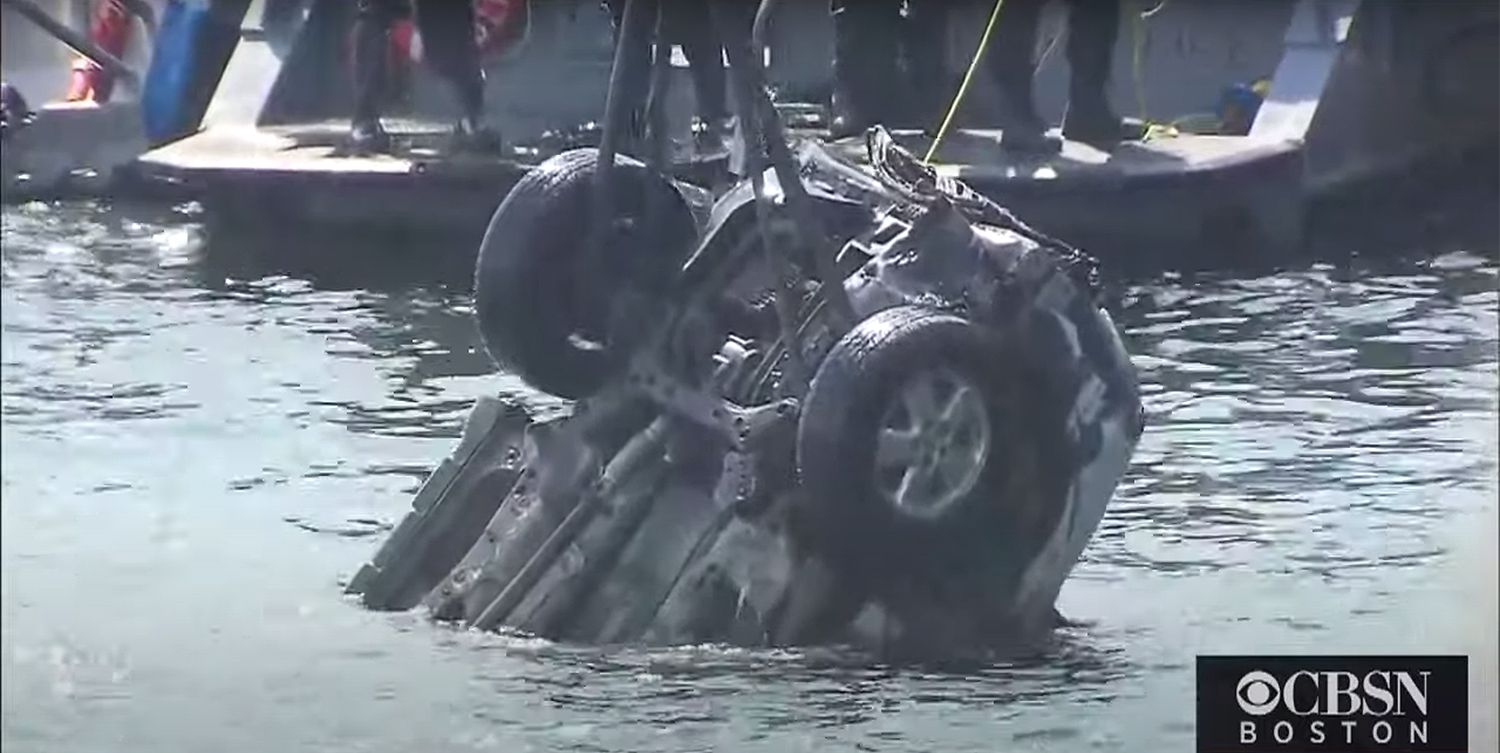
The body of a man in his seventies was found inside his submerged car near Normanton, a small town just south of the Gulf of Carpentaria in far north Queensland. He had not been publicly identified at the time of writing.
Recovering him was not straightforward. Emergency service personnel had to wade into floodwater that runs through crocodile country. Mount Isa District Acting Superintendent Paul Austin, who oversaw the response operation, did not minimise the risk. “There’s some really big crocs in the Norman River,” he told reporters plainly.


The man’s death came during one of the most sustained and severe monsoon events northern Queensland has endured in years. An unusually active monsoon trough and associated low-pressure systems had been delivering heavy rain across both coastal and inland areas for over a week. Some areas had already recorded more than 500 millimetres in just a matter of days — volumes equivalent to several months of average rainfall.
But statistics can flatten the reality. What those numbers meant on the ground, in Normanton and the communities around it, was roads turned to rivers, isolated properties cut off for days, livestock stranded in paddocks with no high ground, and residents making decisions — sometimes fatally wrong ones — about whether to attempt a crossing.
Seven people required rescuing near the town of Ingham. Three others needed medical assistance in separate incidents in the region. Emergency services were stretched across a vast geography with limited resources and deteriorating access routes. Helicopters became the primary means of reaching the most isolated properties.
The town of Normanton itself, population roughly 1,200, sits at a geographic pinch point where the Norman River drains an enormous inland catchment toward the Gulf. When the monsoon dumps this volume of water into that system, the Norman River becomes something different altogether. It spreads. It moves. It overtakes the roads that are the only connection between the town and the rest of Queensland.
Major flood warnings were issued for the Flinders River, with additional warning zones covering the Cloncurry, Mulgrave, Georgina, Norman, and Diamantina river systems. The Bureau of Meteorology was tracking multiple elevated river systems simultaneously, each one raising the risk for communities further downstream.
For northern Queensland, this was not a novel experience — and that is itself the problem. The 2019 Townsville floods killed five people and caused catastrophic damage across the region’s grazing and agricultural districts. Early the following year, floods struck again across many of the same shires, killing two people and displacing hundreds. Now, those same communities were being asked to absorb another significant event, with infrastructure still patchy from previous disasters and mental health services already stretched well beyond capacity.
Many residents contacted by local media described severe anxiety. Not just about the immediate danger, but about the accumulated weight of repeated emergency events over a very short period of years. Farmers who had rebuilt from 2019, borrowed against 2022, and limped through 2024 were now watching their fences disappear underwater again.
The Queensland state government activated disaster assistance measures covering the affected local government areas. Evacuation centres opened in regional hubs, though reaching them required navigating roads that were themselves under threat. The Australian Defence Force was placed on standby. Emergency fodder drops for stranded livestock were coordinated through agricultural support networks.
At Bingil Bay on the northeast coast, around 1.1 metres of rain had fallen in a four-day span. Innisfail had seen daily rainfall totals exceeding 400 millimetres — the highest that town had recorded since 1999. These were not one-town outliers. They were representative of a system that had positioned itself over far north Queensland and was releasing its moisture with concentrated, sustained intensity.
The death near Normanton returned, again, to a question that emergency authorities raise after almost every major Australian flood event: why do people drive into floodwater? The answer is complicated. Remote communities often have no viable alternative route. People gauge by sight and misjudge depth. There is cultural pressure to keep moving, to get home, to not be the person who abandoned the vehicle and walked back.
There is also, increasingly, a fatigue with warnings. When flood warnings are issued for a region multiple times per year, every year, they begin to lose their urgency for the people who live there. Emergency management researchers have documented this pattern extensively. Communities that have survived many floods develop heuristics about what is dangerous and what is manageable — and those heuristics, developed in conditions that were once normal, are now increasingly miscalibrated against weather events that have grown more severe.
The man near Normanton, whose name had not been released at the time of reporting, was in his seventies. He would have seen dozens of monsoon seasons. He would have known those roads. Whatever decision he made when he encountered the floodwater, he made it based on experience. It was not enough.
As the recovery operation continued and river levels began to slowly drop across the region, emergency services urged residents to continue exercising extreme caution on roads. Floodwater was still moving through river systems. Some crossings that appeared passable were hiding deeper channels beneath the surface.
The crocodiles, of course, were still there.
Northern Queensland’s flood season typically runs from December through March, but the systems that have driven the most damaging events in recent years have shown increasing unpredictability in their timing and intensity. Forecasters say the region should expect further significant rainfall events before the wet season concludes.
For the families of those who lost loved ones this season and for the emergency workers who had to wade into that river to bring a man home the forecasts for what comes next offer little comfort.









Leave a Comment