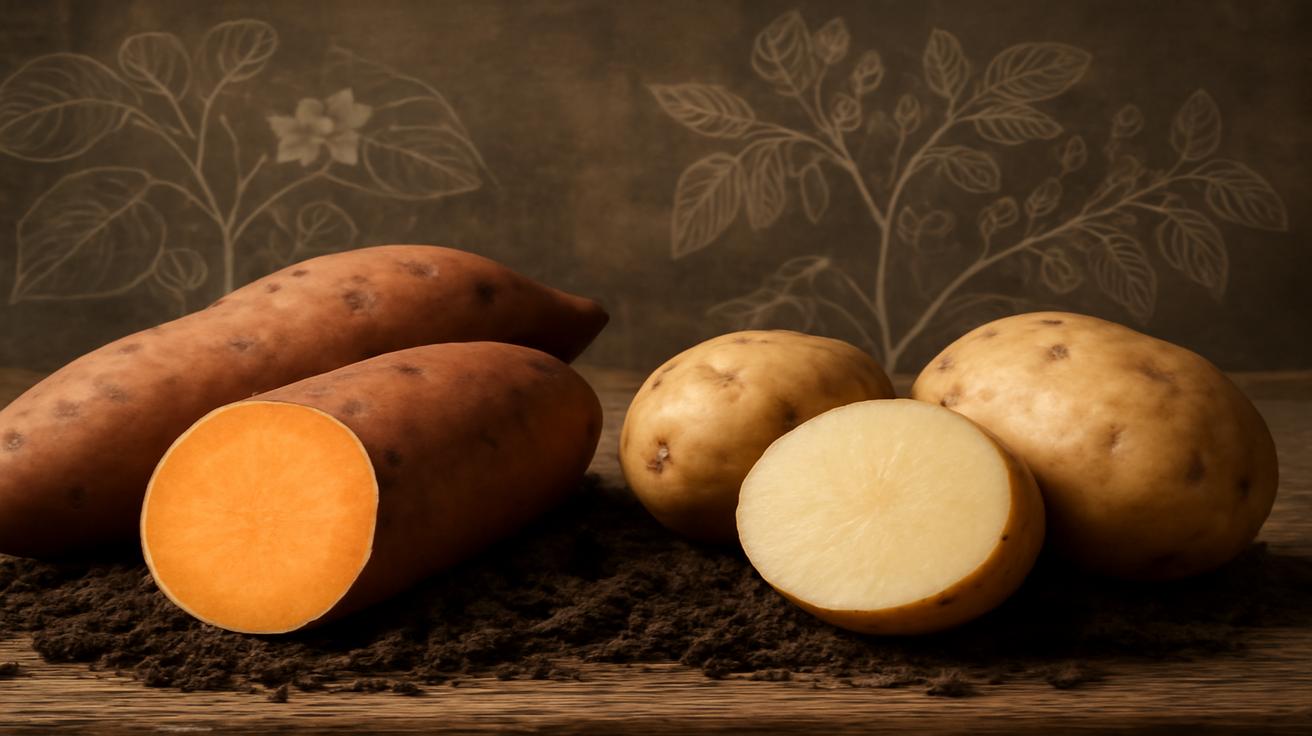
When autumn rolls around and kitchens fill with the aroma of roasted vegetables and warm spices, most diners don’t pause to consider the botanical secrets hiding beneath the skin of their dinner plates. The sweet potato casserole and the crispy french fries sitting side by side represent one of nature’s most surprising imposters. Despite their superficial similarities and shared culinary roles, sweet potatoes and regular potatoes are barely related from a scientific standpoint, and the reasons behind this botanical mystery reveal a fascinating story about plant evolution and human agriculture.


A Case of Mistaken Identity
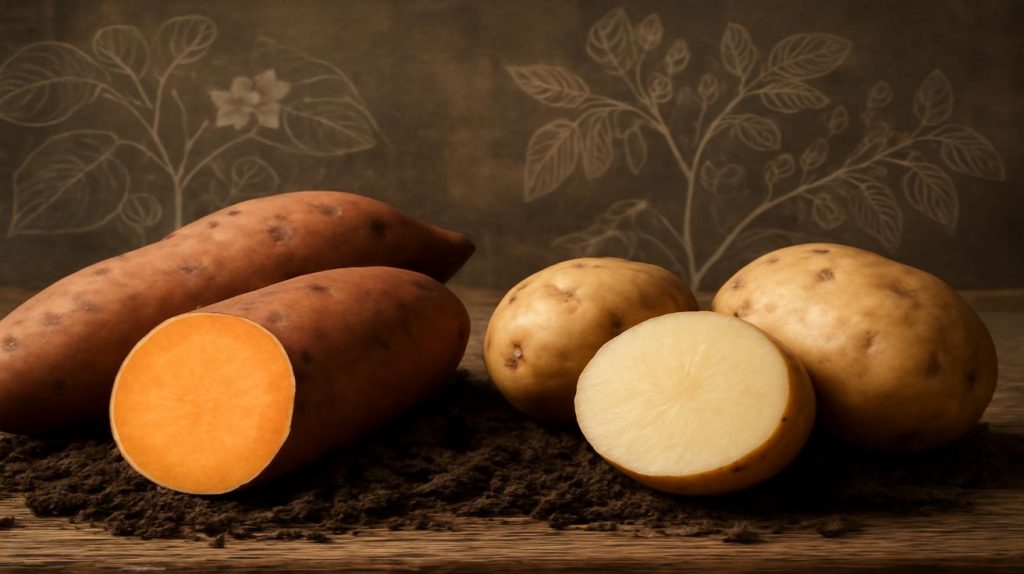
The confusion surrounding sweet potatoes and regular potatoes begins with a fundamental misunderstanding about plant taxonomy. When most people reach for a sweet potato at the grocery store, they’re actually selecting a member of the morning glory family, scientifically known as Ipomoea batatas. Meanwhile, the humble russet or yellow potato sitting nearby belongs to the nightshade family, Solanaceae, the same family that includes tomatoes, peppers, and eggplants. This distinction might seem like academic minutiae, but it represents a profound difference in biological heritage that stretches back thousands of years.
The naming confusion itself played a significant role in cementing the false relationship between these two crops. When European colonizers encountered sweet potatoes in the Americas, they struggled to categorize what they were seeing. The word “potato” eventually became attached to both crops, creating a linguistic bridge that obscured their true biological distance. In some regions, sweet potatoes are even called “yams,” adding another layer of nomenclatural complexity that further muddies public understanding.
Evolutionary Pathways: A Tale of Two Tubers
The evolutionary histories of these two plants diverged millions of years ago, long before humans began cultivating them. Regular potatoes, which originated in the Andes Mountains of South America, underwent domestication approximately 8,000 to 10,000 years ago by indigenous peoples who recognized their nutritional value and ability to grow at high altitudes. These early cultivators selectively bred potatoes for desirable traits, gradually transforming wild tubers into the starchy vegetables we recognize today.
Sweet potatoes, by contrast, have a different and somewhat less clear origin story. Scientists believe they were domesticated in Mesoamerica or Central America between 5,000 and 10,000 years ago, though some evidence suggests their wild ancestors may have originated in South America as well. However, the crucial point is that these two crops developed through separate domestication events from completely different wild plant species. Despite both ending up as starchy tubers, they arrived at this form through entirely independent evolutionary pathways.
Genetic Differences That Reveal the Truth
Perhaps the most compelling evidence of the vast biological distance between sweet potatoes and regular potatoes lies in their genetic makeup. Modern DNA analysis has allowed scientists to trace the chromosomal composition of both crops with remarkable precision. Regular potatoes contain 48 chromosomes, organized in four sets, making them tetraploid organisms. The genetic complexity of potatoes involves contributions from multiple wild potato species that interbred during the domestication process.
Sweet potatoes present an even more complex genetic picture. They contain 90 chromosomes, organized in various configurations depending on the specific variety. This chromosome count immediately reveals how genetically distant these plants truly are. The polyploidy level of sweet potatoes is so different from regular potatoes that successful breeding between the two crops would be essentially impossible without significant scientific intervention. Their genetic incompatibility underscores just how separate their evolutionary journeys have been.
Structure and Growth: Beyond Surface Similarities
While both plants produce edible underground organs, the structural differences between their tubers reflect their distinct biological origins. Regular potato tubers develop as enlarged portions of underground stems called stolons. These modified stems accumulate starch as a storage mechanism, creating the familiar potato we peel and cook. The structure and composition of a potato tuber reflect its function as a winter survival mechanism for the nightshade plant.
Sweet potato tubers, conversely, develop as modified roots rather than stems. This fundamental structural difference means they store energy differently and develop through entirely separate biological processes. The flesh and texture of sweet potatoes reflect their origin as root crops, not stem crops. This distinction affects everything from how they cook to their nutritional profile and their resistance to various pests and diseases.
Nutritional Profiles Tell Their Own Story
While both crops provide valuable carbohydrates and nutrients, their nutritional compositions differ in meaningful ways that reflect their different evolutionary adaptations. Regular potatoes are excellent sources of vitamin B6, potassium, and manganese, with white potatoes containing minimal fat and colored varieties offering anthocyanins and other beneficial compounds. Sweet potatoes shine with their exceptional vitamin A content, derived from beta-carotene, and offer more fiber in their skin and flesh.
These nutritional differences aren’t random variations between vegetable varieties. They represent deliberate biological investments by each plant species to ensure their own survival and reproduction. Sweet potatoes’ emphasis on vitamin A may have provided advantages in specific growing conditions or environments, while potatoes developed their nutrient profile based on entirely different selective pressures. Understanding these nutritional divergences provides another window into their separate botanical origins.
Agricultural Implications of Their Independence
The biological distance between sweet potatoes and regular potatoes has profound implications for modern agriculture. Farmers cannot use the same disease resistance genes from wild potato relatives to protect sweet potato crops, and vice versa. The late blight that devastated potato crops in 19th-century Ireland cannot affect sweet potatoes through the same mechanism. Breeding programs for crop improvement must develop separately for each species, requiring distinct research investments and agricultural strategies.
This separation also affects crop rotation practices and pest management approaches. A field depleted of specific soil nutrients by regular potato cultivation will recover differently than one stressed by sweet potato production. Understanding these agricultural differences helps farmers maintain healthier soil and more sustainable growing practices.
The Persistence of Misconception
Despite scientific consensus on their botanical independence, the misconception that sweet potatoes and regular potatoes are related persists in popular culture and even in some educational contexts. Grocery stores typically display them in separate sections, yet marketing materials and recipe websites frequently suggest them as interchangeable ingredients. This confusion extends to nutritional discussions, where the superior vitamin A content of sweet potatoes sometimes gets lumped into general “potato” nutritional information.
The persistence of this misunderstanding demonstrates how powerful linguistic conventions and culinary traditions can be. Once a naming pattern becomes established, it often persists regardless of scientific accuracy. The fact that both crops happen to be starchy, underground-growing carbohydrate sources makes them seem like obvious relatives, despite their profound biological differences.
Looking Forward: Appreciating Botanical Diversity
As climate change pressures agricultural systems worldwide, understanding the true nature of our food crops becomes increasingly important. Sweet potatoes and regular potatoes may serve similar culinary roles and occupy similar ecological niches, but their independence means they likely have different responses to environmental stress. A drought that impacts potato production might not affect sweet potatoes in the same way, or vice versa. This diversity offers resilience and options for food security.
The next time you prepare a thanksgiving dinner with both sweet potato casserole and mashed potatoes, consider the remarkable botanical journey that brought these distinct plants to your table. They represent separate evolutionary experiments in how to turn sunlight and soil into nutritious human food. Rather than relatives, they are more accurately described as convergent solutions to similar agricultural problems, arriving at their answers through millions of years of independent development. This perspective transforms what might seem like a simple vegetable preparation into a window onto the incredible diversity of plant life and the complex history of human food cultivation.










Leave a Comment