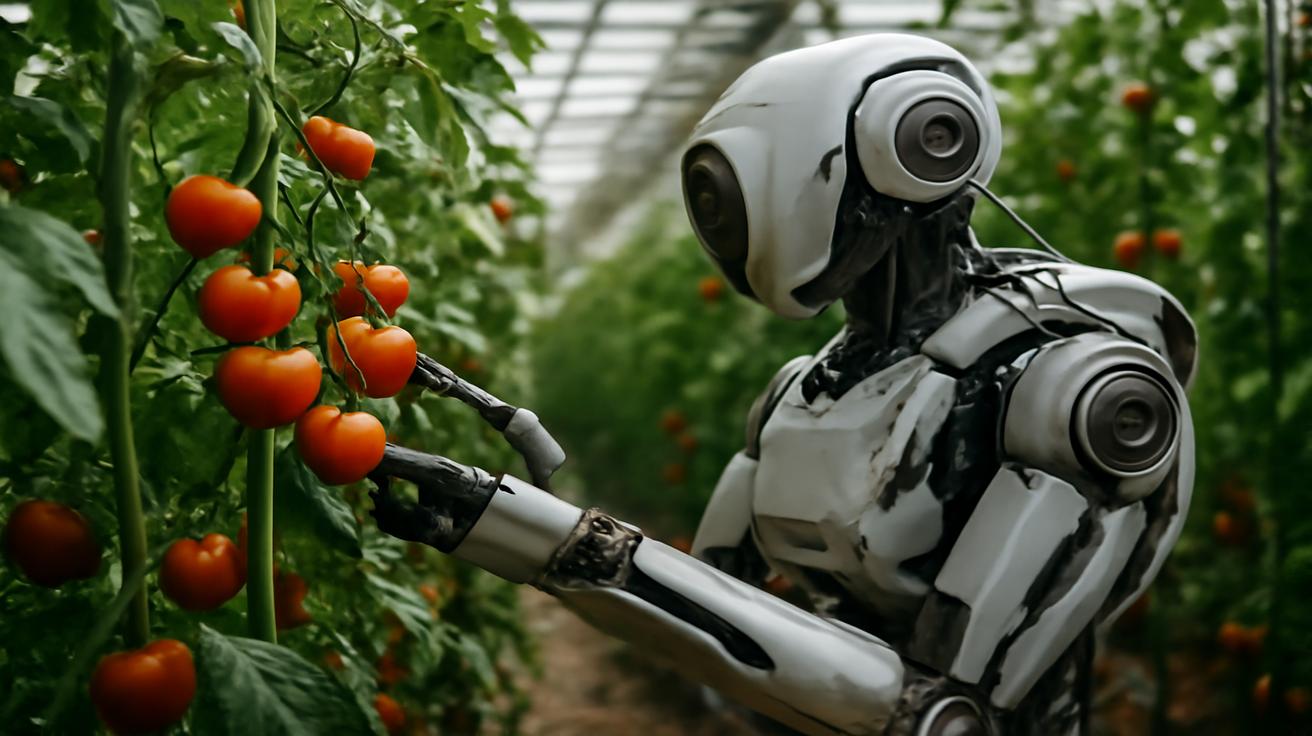
The tomato harvest industry stands at an inflection point. While workers in fields across California, Spain, and the Mediterranean region have manually picked tomatoes for generations, a technological transformation is quietly reshaping this centuries-old practice. Advanced robotic systems equipped with machine learning algorithms are entering greenhouses and field operations, armed with the ability to assess ripeness, evaluate fruit quality, and make autonomous decisions about which tomatoes deserve harvesting—all in real time.


The Intelligence Behind the Machine
Unlike conventional automation systems that follow predetermined paths and pre-programmed instructions, the latest generation of harvest robots incorporate sophisticated decision-making capabilities. These machines are built on neural networks trained with thousands of images representing different ripeness levels, bruise patterns, and fruit characteristics. When a robot encounters a tomato cluster, it doesn’t simply grab and pull. Instead, it pauses—metaphorically speaking—to evaluate the fruit against complex criteria.
The system asks itself a series of questions: Is this tomato at optimal ripeness? Will it withstand transport and storage? Does it have visible defects? Are nearby fruits better candidates for harvesting? This computational deliberation occurs in milliseconds, but it represents a fundamental shift in how machines interact with delicate agricultural products.
Computer vision specialists have developed algorithms that can distinguish between tomatoes at different maturity stages with accuracy rates exceeding 95 percent. The cameras mounted on these robotic arms capture images in multiple light spectrums, including near-infrared, allowing the system to detect ripeness patterns invisible to the human eye.
Addressing the Labor Challenge
The global tomato industry faces persistent labor shortages. In the United States alone, agricultural operations struggle to fill seasonal positions, with some farms reporting vacancy rates above 40 percent. Immigration restrictions, changing demographic patterns, and younger generations’ preference for non-agricultural work have created a bottleneck in harvest capacity.
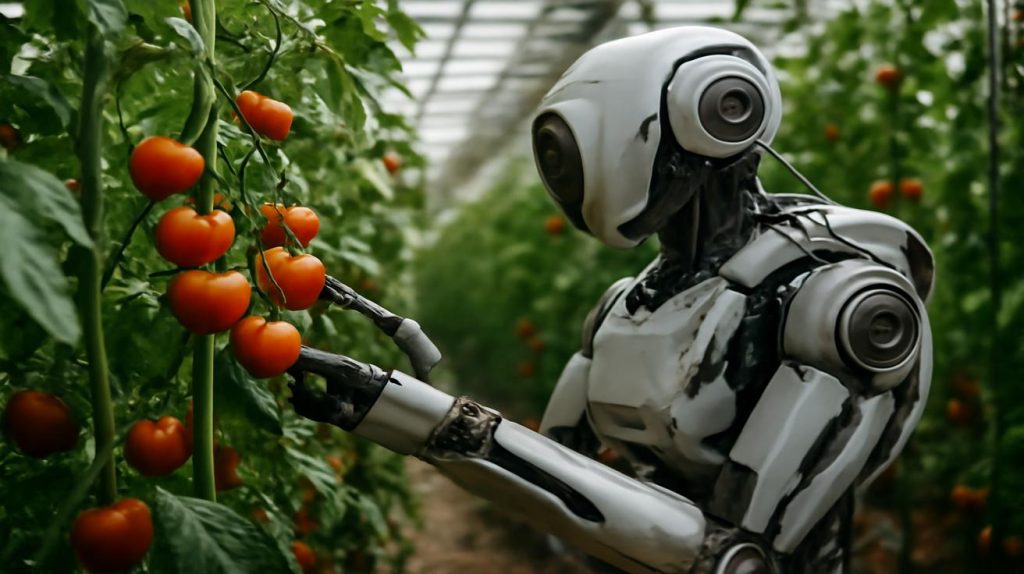
This constraint directly impacts supply chain economics. When labor becomes scarce, harvest timing becomes compressed. Farmers must pick tomatoes at less-than-ideal ripeness levels to ensure crops are gathered before fruit deteriorates on the vine. The intelligent harvest robots address this challenge by extending the productive harvest window. They can operate continuously, without fatigue or time constraints, allowing farms to harvest tomatoes at peak ripeness.
Additionally, these machines reduce physical strain on human workers who remain in supervisory, maintenance, and quality control roles. Rather than replacing workers entirely, many farming operations are repositioning staff into higher-skilled positions that focus on system optimization and produce assessment.
Economic Impact and Farm Operations
The financial implications of intelligent harvest automation extend beyond simple labor replacement. Farms implementing these systems report measurable improvements in yield quality and reduction in post-harvest waste. When tomatoes are picked at optimal ripeness, shelf life extends, reducing spoilage in distribution networks. Studies from agricultural research institutions suggest that intelligent harvesting can increase usable yield by 12 to 18 percent per season.
The initial capital investment remains substantial—a single harvesting unit can cost between $150,000 and $300,000 depending on sophistication level and mobility features. However, operational cost analyses indicate payback periods of three to five years for large-scale operations, with ongoing cost savings as systems prove their efficiency.
Furthermore, the data these robots collect provides unprecedented insight into farm operations. Each harvest decision is logged, creating detailed records of plant productivity, optimal picking times, and yield patterns across different field sections. This information enables precision agriculture practices where resource allocation—water, nutrients, pest management—can be optimized based on actual plant performance data.
Technological Advances Enabling the Revolution
Several concurrent technological developments have made intelligent harvest robots viable now. Improvements in battery technology have extended operational time per charge to eight or more hours. Advances in robotic gripper design have created mechanisms gentle enough to harvest delicate fruit without causing bruising. Enhanced wireless connectivity allows multiple robots to coordinate activities within a farm environment.
Machine learning models have become significantly more efficient, requiring less computational power to execute complex decisions. What previously required server-grade processors can now run on edge computing devices mounted directly on the harvest robot. This eliminates latency issues and improves response times for picking decisions.
Sensor miniaturization has been equally important. Modern harvest robots incorporate multiple sensors—RGB cameras, thermal imaging, spectral analysis tools—in compact packages weighing less than traditional mechanical harvesting equipment. The durability of these sensors has also improved, with many systems maintaining accuracy even after exposure to high humidity, temperature fluctuations, and dust common in agricultural environments.
Real-World Deployment and Results
Several commercial tomato farms have begun pilot programs with intelligent harvesting systems. Operations in the Netherlands, where labor costs are particularly high and precision agriculture is culturally embedded, report successful implementation of early-generation systems. Farms managing 50 to 100 acres have reduced harvest labor requirements by 35 to 40 percent while simultaneously improving fruit quality metrics.
Greenhouse operations have proven particularly suitable for these systems. The controlled environment allows robots to operate more reliably, with consistent lighting and climate conditions optimizing sensor performance. Some greenhouses now deploy fleets of five to ten harvesting robots working simultaneously, covering ground more efficiently than human teams.
Field harvesting operations present greater complexity due to variable terrain, inconsistent lighting, and exposure to weather. However, improvements in terrain navigation systems and adaptive lighting algorithms have extended intelligent harvesting capability to field environments, albeit with somewhat reduced efficiency compared to controlled greenhouse operations.
Future Trajectory and Industry Outlook
Industry analysts project that intelligent harvest robots will achieve significant market penetration within the next five to seven years. As manufacturing scales increase and competing systems enter the market, unit costs are expected to decline by 20 to 30 percent, making the technology accessible to mid-sized operations beyond major industrial farms.
The next generation of these systems will likely incorporate even more sophisticated decision-making, including predictive models that anticipate ripeness development and optimize harvest scheduling. Integration with farm management software will enable seamless coordination between harvesting operations, storage facilities, and distribution networks.
Beyond tomatoes, the technology being developed for intelligent harvesting is transferable to other delicate crops including berries, stone fruits, and specialty vegetables. The fundamental capability—machines that assess quality in real time and make selective harvesting decisions—applies broadly across produce agriculture.
Conclusion
The quiet revolution happening in tomato fields represents more than mechanical advancement. It embodies a fundamental rethinking of how agriculture can leverage artificial intelligence to improve efficiency, quality, and sustainability. As these intelligent systems mature and proliferate, they promise to reshape not just tomato farming, but the entire spectrum of harvest operations that feed global populations. The future of food production appears to be one where machines don’t simply execute predetermined actions, but rather think critically about each decision, optimizing for quality, efficiency, and the sustainable stewardship of agricultural resources.









Leave a Comment