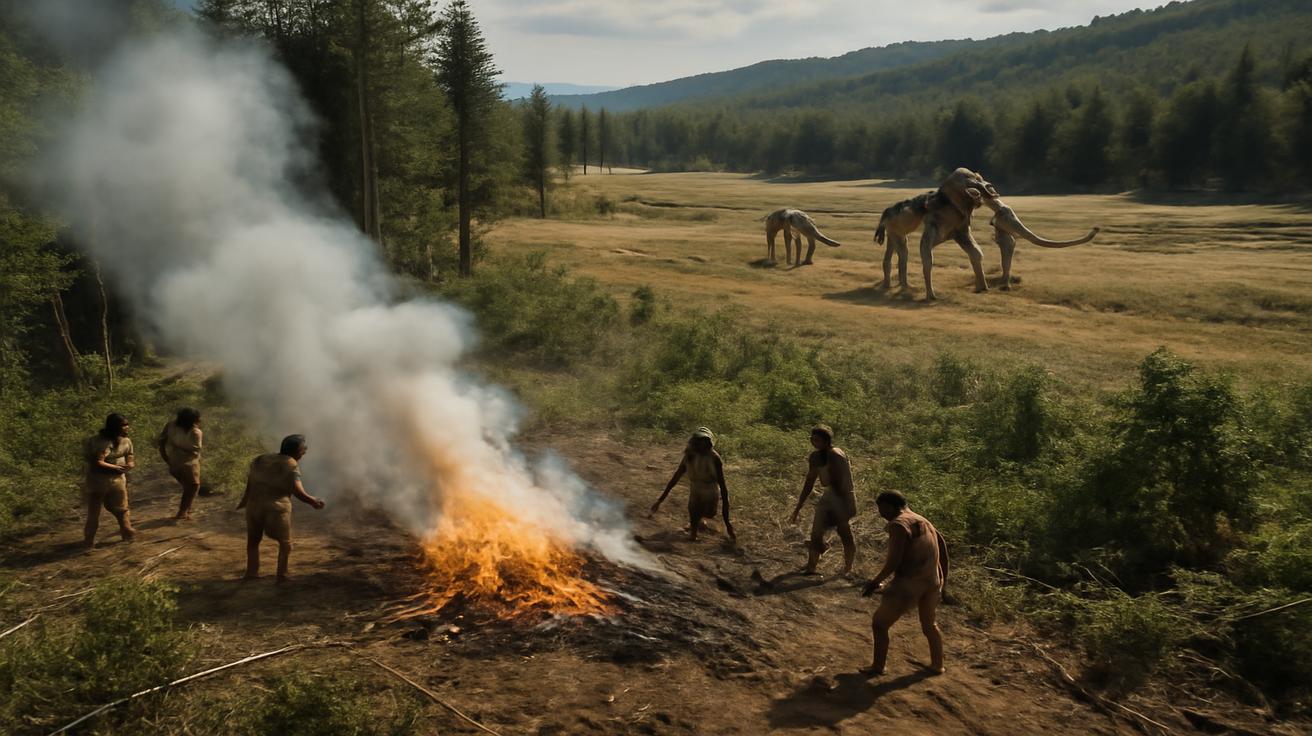
The first thing you notice is the silence. You’re standing in a wide, open valley just after sunrise, somewhere between grassland and forest, the air damp with morning mist. It’s the kind of landscape that feels timeless, untouched by modern civilization. Yet beneath your feet lies compelling evidence that this seemingly pristine environment has been shaped by human hands for millennia—far longer and more dramatically than scientists have traditionally acknowledged.


Recent archaeological and environmental studies are fundamentally reshaping our understanding of humanity’s relationship with the natural world. For decades, the prevailing scientific narrative suggested that human impact on ecosystems remained relatively modest until agricultural societies emerged roughly 10,000 years ago. The consensus held that only with industrialization did our species truly alter planetary systems on a significant scale. However, mounting evidence from multiple disciplines now paints an entirely different picture, one in which ancient hunter-gatherer societies and early human populations engineered their environments with surprising sophistication and scale.
Rewriting the Timeline of Human Environmental Impact
The transformation in scientific thinking began as researchers started connecting disparate findings from various fields. Paleoecologists studying pollen deposits and tree rings noticed unusual patterns in vegetation history. Archaeologists uncovered evidence of controlled burning practices spanning tens of thousands of years. Paleontologists tracked the extinction timing of megafauna species. When integrated, these discoveries told a story quite different from the wilderness preservation narrative that had dominated environmental history.
“What we’re seeing is that humans were actively managing their landscapes as far back as we can reliably detect human presence,” explains one leading researcher in the field of environmental archaeology. This management extended across diverse continents and climates. In Australia, Aboriginal peoples employed sophisticated fire-stick farming techniques for over 65,000 years, creating a mosaic of vegetation types that enhanced resource availability and biodiversity. Indigenous peoples across the Americas deliberately shaped forest composition through selective harvesting and burning practices. In Africa and Europe, early human populations hunted megafauna to extinction and fundamentally altered predator-prey dynamics.
The implications challenge fundamental assumptions about what constitutes “natural” landscapes. Many ecosystems that modern scientists regarded as pristine wilderness were actually the products of millennia of human management and modification. The expansive grasslands of North America, once attributed to climate and natural fire patterns, show clear evidence of human manipulation. The tropical forests of the Amazon, long considered a self-maintaining natural system, contain abundant archaeological evidence of pre-Columbian engineering, from terra preta soil creation to extensive settlement networks.
Megafauna Extinction and Ecosystem Restructuring
Perhaps the most dramatic evidence of ancient human ecological impact emerges from the study of megafauna extinctions. Within a relatively brief window following human arrival on various continents, populations of large animals—woolly mammoths, giant ground sloths, massive wombats, enormous armored glyptodonts—vanished from the fossil record. The timing correlation between human arrival and megafauna disappearance is too consistent to be coincidental.
These extinctions triggered cascading ecological effects throughout entire food webs and nutrient cycles. The absence of large herbivores transformed vegetation patterns. Without mammoths and mastodons grazing on steppe vegetation, grasslands shifted toward shrubland and forest. The loss of giant ground sloths in South America altered seed dispersal patterns for numerous plant species dependent on their feeding habits. The removal of these massive browsers fundamentally restructured how energy flowed through ecosystems.
Some researchers estimate that megafauna extinctions released stored carbon from vegetation changes across millions of acres, potentially influencing regional climate patterns. While the precise magnitude remains debated, the directional impact is clear: human hunting activity triggered ecosystem-wide transformations that persisted for millennia.
Fire as an Ancient Tool for Landscape Engineering
Perhaps more significant than hunting, controlled burning represents one of humanity’s most powerful environmental modification tools. Archaeological evidence and traditional ecological knowledge now indicate that ancient peoples across multiple continents deliberately burned landscapes to achieve specific ecological outcomes. These weren’t accidental fires or uncontrolled conflagrations, but managed practices informed by sophisticated understanding of fire ecology and seasonal timing.
In Australia, Aboriginal fire management created a landscape of incredible biodiversity. By burning small patches at different times of year, practitioners prevented catastrophic wildfires while maintaining diverse habitat types at different successional stages. This created ideal conditions for numerous plant and animal species, increasing overall productivity and resource availability for human populations.
Indigenous peoples of California employed similar strategies, burning coastal scrublands to encourage the growth of hazel shoots for basket weaving material and to create forest conditions that produced abundant acorns. Pre-contact peoples of the Pacific Northwest used fire to maintain prairie habitats that supported elk and other game species. These practices weren’t incidental to human economies; they formed core components of sophisticated resource management systems.
Soil Engineering and Agricultural Precursors
Beyond hunting and burning, archaeological research reveals that ancient peoples actively engineered soils and modified water systems. The most striking example comes from terra preta discoveries in the Amazon basin. Archaeological teams have identified vast areas where pre-Columbian populations created extraordinarily fertile dark earth through deliberate amendment with charcoal, bone, and organic matter. These engineered soils persist today, remaining far more fertile than surrounding rainforest soils even centuries after abandonment.
The scale of this activity is staggering. Some estimates suggest that terra preta creation and management extended across hundreds of thousands of acres. This represents not casual modification but systematic landscape engineering on a continental scale. These soils supported dense populations—recent research suggests the pre-Columbian Amazon may have housed 8 to 10 million people, not the sparse population assumed in older accounts.
Implications for Conservation and Environmental Policy
These discoveries carry profound implications for contemporary environmental management and conservation philosophy. If the landscapes we regard as pristine wilderness actually represent products of ancient human management, then excluding humans from these areas may actually diminish their ecological value. Some ecosystems may require the continuation of traditional management practices to maintain their characteristic biodiversity.
This realization has catalyzed a fundamental shift in conservation approaches. Rather than viewing humans as inherently destructive to natural systems, an increasing number of conservation projects now incorporate traditional ecological knowledge and practices. Indigenous land management in Australia, New Zealand, and other regions is being recognized as crucial for maintaining ecosystem health.
The broader message is humbling: humanity’s relationship with the environment is ancient, complex, and powerful. Our ancestors weren’t passive inhabitants of their landscapes but active architects who understood and intentionally shaped their surroundings. Understanding this history provides crucial context for addressing contemporary environmental challenges and reminds us that sustainable coexistence with natural systems isn’t a new concept but rather the recovery of ancient wisdom.










Leave a Comment