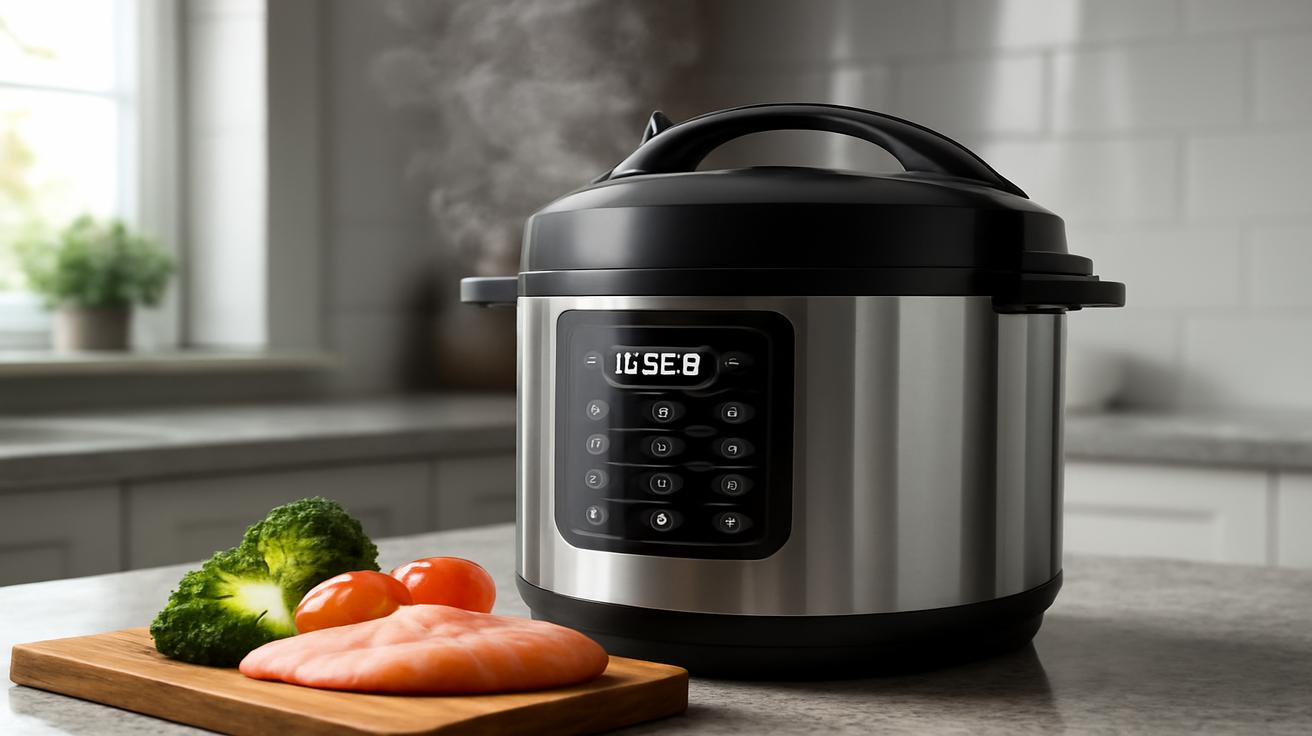
The kitchen appliance market is experiencing a quiet revolution—literally. While air fryers have dominated countertops for years with their characteristic fan noise, a new generation of cooking devices is emerging that prioritizes silence alongside unprecedented versatility. This breakthrough appliance combines nine different cooking methods into a single compact unit, challenging consumers to reconsider what they actually need on their kitchen counters.


Breaking the Sound Barrier in Kitchen Technology
The most striking feature isn’t immediately visible. When you power on this new appliance, you won’t hear the aggressive whirring that’s become synonymous with air fryer cooking. Instead, you’re met with near-complete silence—a design philosophy that engineering teams spent months perfecting. This quieter operation stems from a fundamentally different approach to food preparation, moving away from high-velocity air circulation toward more sophisticated heating and moisture management systems.
Designers recognized that home cooks were increasingly frustrated with appliance noise, particularly in open-plan kitchens and smaller living spaces. The clattering hum of traditional air fryers could reach volumes comparable to a vacuum cleaner, making meal preparation a disruptive household event. This new device challenges that assumption, proving that efficiency doesn’t require noise.
Nine Cooking Methods Under One Sleek Exterior
While the quiet operation captures immediate attention, the true innovation lies in the appliance’s versatility. Rather than replacing a single cooking method, this device consolidates nine distinct techniques that previously required separate equipment or stovetop management.
The primary function remains efficient air circulation cooking, but it’s been refined with precision temperature control that maintains accuracy within a single degree. Beyond this foundation, the appliance includes:
- Steam cooking—maintaining vegetable crispness while preserving nutrients
- Bake mode—replicating traditional oven conditions for pastries and breads
- Roast function—delivering even browning on meats and vegetables
- Grill capability—creating charred surfaces and defined grill marks
- Dehydration settings—transforming fresh produce into shelf-stable snacks
- Slow-cook mode—enabling tender, fall-apart results for tougher cuts
- Sous-vide preparation—maintaining precise water temperatures for vacuum-sealed cooking
- Sauté function—browning ingredients before slow cooking or braising
- Proof settings—supporting bread and dough fermentation at optimal temperatures
Design Philosophy Meets Practical Engineering
The engineering behind this appliance reflects years of market research and user feedback. Manufacturers discovered that home cooks didn’t necessarily want an air fryer—they wanted a reliable cooking solution that adapted to different ingredients and techniques. The previous generation of kitchen gadgets created drawer clutter, with specialty devices gathering dust after initial enthusiasm faded.
This new device addresses that fatigue through thoughtful integration. The touchscreen interface intelligently suggests cooking methods based on the food type you select. Input that you’re preparing chicken thighs, and the system recommends optimal temperature, duration, and method. This guidance particularly benefits newer cooks who might feel uncertain about technique selection.
The heating system employs multiple element placement and circulation patterns rather than relying on a single high-powered fan. This distribution method generates more consistent results, particularly for delicate foods that would overcook on the exterior while remaining raw internally. The moisture management system prevents the excessive drying that sometimes accompanies traditional air frying, returning texture control to the user rather than forcing all recipes through a single aggressive method.
Beyond Trends: Addressing Real Kitchen Needs
The explosion of single-purpose kitchen gadgets over the past decade created a sustainability conversation around unnecessary consumption. Households accumulated unitaskers—devices serving one narrow function before being relegated to storage. This appliance represents a counter-movement toward consolidated, multi-purpose equipment.
Environmental consciousness drives the appeal for many consumers. Fewer appliances mean reduced manufacturing impact, less packaging waste, and decreased energy consumption from powering multiple devices. A household that previously ran an air fryer, separate dehydrator, slow cooker, and traditional oven now accomplishes all those functions through one efficient unit.
The power consumption proves notably lower than operating traditional ovens for equivalent cooking tasks. The compact chamber heats rapidly and maintains temperature with minimal energy waste. For families cooking multiple meals daily, the cumulative energy savings become meaningful on monthly utility bills.

Practical Performance Testing and Real-World Results
Early adopters report surprising performance improvements over existing air fryer technology. Frozen french fries achieve golden exterior crispness without the interior greasiness that sometimes results from rapid air circulation. Baked goods maintain moisture and develop proper structure, suggesting this method truly replicates oven conditions rather than approximating them.
The dehydration function operates at lower temperatures than traditional dehydrators, preserving nutritional content and vibrant colors in vegetables and fruits. Home cooks report that jerky production takes slightly longer but yields more tender results than high-heat methods. The slow-cook function handles braising tasks with precision, creating fall-apart textures in pot roasts and stews.
One significant advantage emerges in meal prep efficiency. Users can simultaneously prepare components using different methods—roasting vegetables while slow-cooking proteins and proofing dough—though sequential cooking remains the primary application for single-chamber units. Advanced models are now entering development stages with dual chambers, addressing this limitation.
The Accessibility Factor
Compact kitchen spaces represent growing reality for urban residents and younger home buyers. This consolidated appliance makes particular sense for apartments and small homes where counter real estate is premium. The footprint roughly matches standard air fryers but delivers capabilities that previously required three to four separate devices.
The price point—roughly comparable to high-end air fryers—offers significant value when calculating the cost of replacing multiple specialized appliances. A household considering an air fryer, dehydrator, and upgraded slow cooker would spend considerably more assembling that collection than purchasing this single unit.
Looking Forward: Evolution of Kitchen Appliances
This development signals broader shifts in appliance design philosophy. Consumers increasingly expect technology to simplify rather than complicate kitchen life. The days of endless gadget accumulation appear to be concluding, replaced by the practical consolidation approach this device exemplifies.
Manufacturers are responding by developing interconnected smart features—apps that send recipes directly to the appliance, voice control integration, and energy monitoring that tracks cooking efficiency. These digital enhancements support the core mission: making sophisticated cooking techniques accessible without expanding kitchen footprints or noise levels.
For anyone reconsidering their countertop setup, this appliance offers compelling reasoning to step beyond the air fryer conversation. The quiet operation, combined with nine distinct cooking capabilities, represents genuine advancement in how modern households approach meal preparation. The kitchen revolution is happening—and remarkably, it’s almost completely silent.











Leave a Comment