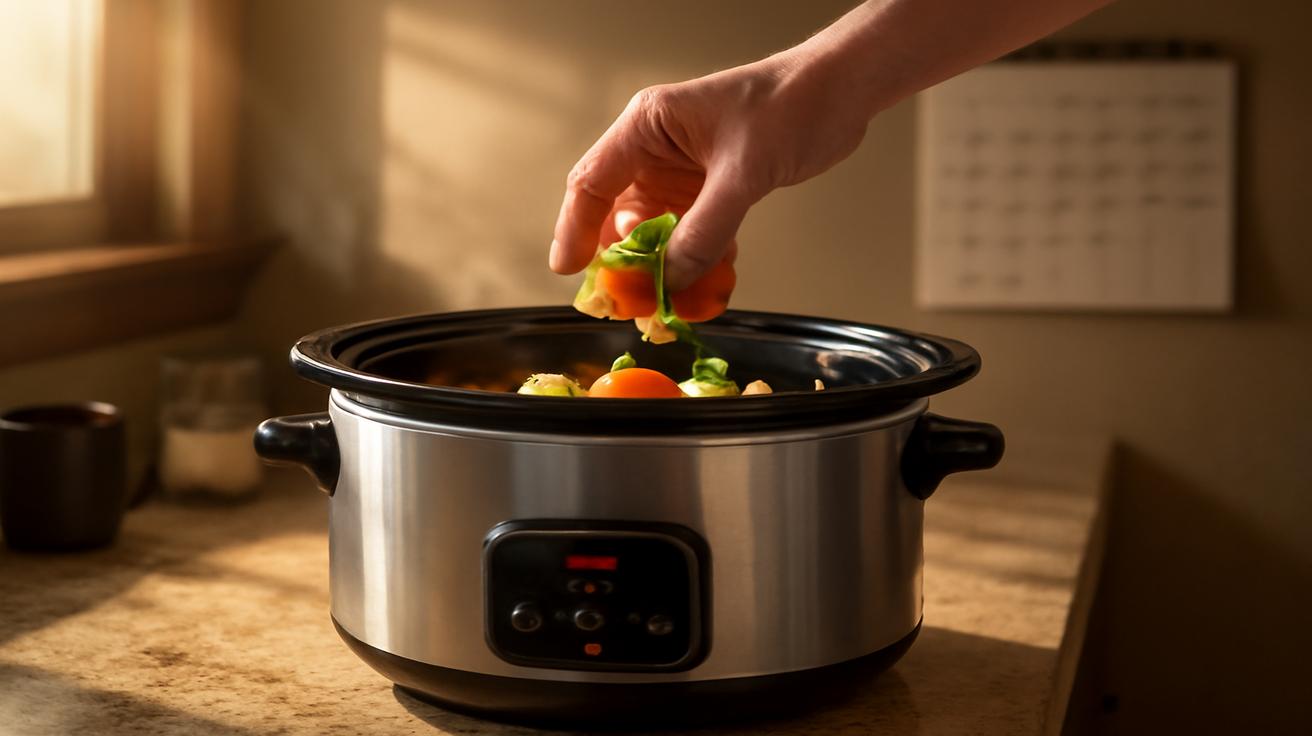
There’s a particular kind of exhaustion that comes from knowing a day will demand everything you have to give. Whether it’s back-to-back meetings, family obligations, or unexpected challenges, the anticipation of a grueling schedule can feel overwhelming even before your alarm goes off. For many people navigating these demanding periods, a single morning action has become transformative: preparing a slow cooker meal before leaving for the day.


The Psychology Behind the Evening Preparation
The ritual often begins the night before, when awareness settles in that tomorrow will be challenging. There’s something grounding about standing in a quiet kitchen, feeling cool tile beneath bare feet, and methodically preparing ingredients for the next day’s cooking. This isn’t merely about food preparation—it represents taking control of at least one aspect of a chaotic day ahead.
According to meal preparation experts, this pre-planning behavior serves multiple psychological functions. First, it provides a sense of agency. When external circumstances feel beyond your control, deciding what you’ll eat and ensuring it requires minimal effort during the day offers tangible reassurance. Second, the act of preparation itself becomes meditative. The repetitive motions of chopping vegetables, measuring spices, and arranging ingredients in a slow cooker can calm the nervous system before a stressful period.
Why Morning Slow Cooker Activation Makes Sense
The beauty of slow cooker meals lies in their fundamental design. These devices were created specifically for busy people who want home-cooked results without active cooking time during the day. By adding ingredients in the morning—even if preparation happened the previous evening—you’re essentially setting a timer on comfort.
Nutritionists note that slow-cooked meals offer several advantages for those managing stress. The prolonged cooking process breaks down proteins more completely, making nutrients more bioavailable. Additionally, slow cooker meals typically involve whole ingredients rather than processed convenience foods, providing sustained energy that processed alternatives cannot match. This becomes particularly important during high-stress days when your body needs nutritional support most.
The Morning Activation: A Simple Starting Point
The actual morning routine requires minimal time. If you’ve prepared ingredients the night before, the process might take five to ten minutes. Add your prepared vegetables to the ceramic insert, layer your protein, pour in broth or sauce, set the temperature, and leave. Some people adjust timing based on their schedule—eight hours on low for a longer workday, or four hours on high if returning home earlier.
What makes this approach particularly effective is its flexibility. You’re not committed to a specific return time. Whether you arrive home at five in the afternoon or eight at night, the slow cooker maintains your meal at a safe temperature, ready whenever you need it. This adaptability reduces the mental burden of scheduling, which becomes valuable during unpredictable days.
Real-World Applications for Various Lifestyles
Working professionals aren’t the only people discovering this strategy’s value. Parents managing multiple children’s schedules find that slow cooker meals eliminate the evening decision-making fatigue. Teachers preparing for demanding classroom days, healthcare workers with unpredictable shifts, and students juggling coursework and employment all report that this single preparation step changed their daily experience.
The meals themselves vary based on personal preference and dietary requirements. Some people lean toward traditional slow cooker standards: chili, stew, pulled pork, or braised chicken. Others prepare curries, soups, or vegetable-forward dishes. The versatility means someone with any dietary restriction—vegetarian, vegan, gluten-free, or specific allergy considerations—can develop a rotation of slow cooker meals suited to their needs.
The Economic and Environmental Benefits
Beyond the convenience and psychological benefits, slow cooker meal preparation offers practical financial advantages. These meals typically utilize affordable cuts of meat or bulk legumes that develop flavor through extended cooking. A slow cooker meal that feeds four people often costs significantly less than takeout or restaurant meals purchased during a busy day when convenience feels essential.
Environmental considerations also factor in. Slow cookers use less electricity than conventional ovens. More importantly, the practice generally reduces reliance on single-use containers from food delivery services or restaurant takeout, decreasing personal waste contributions.
Building the Slow Cooker Meal Habit
Establishing this practice doesn’t require perfection. Experts in habit formation suggest starting with one slow cooker meal per week, perhaps on your most predictably demanding day. As comfort increases, expanding to multiple weekly meals becomes natural. Many people eventually maintain a rotating menu, with Sunday evening preparation ensuring meals for several upcoming busy days.
The key to sustainability involves keeping ingredient lists simple. Complex recipes with numerous components increase preparation time and the likelihood of abandoning the practice. The most successful slow cooker routines feature straightforward combinations: protein, vegetables, and sauce. Once basic patterns are established, subtle variations maintain interest without adding complexity.
The Comfort Factor: Why This Matters More Than Efficiency Alone
While efficiency explains part of the slow cooker meal appeal, the comfort element deserves emphasis. After a demanding day, arriving home to a meal that’s been simmering for hours—filling your space with welcoming aromas—provides emotional nourishment alongside physical sustenance. The sense that you’ve already accomplished something productive, that dinner isn’t an additional burden to manage, offers psychological relief that cannot be underestimated.
This is particularly significant in contemporary culture, which often treats meals as mere fuel or additional tasks to optimize. The slow cooker represents a different approach: acknowledging that eating matters, that meals deserve thought and care, and that you deserve to eat well even during your most challenging days.
Creating Your Personal Ritual
The specific elements of your slow cooker ritual matter less than consistency. Some people prefer evening preparation, finding the kitchen work meditative before bed. Others prefer morning assembly, using those few minutes to consciously transition into their busy day. Some set automatic timers, while others manually turn slow cookers on upon leaving home, adding a physical action that reinforces intention.
The ritual becomes personal over time. Perhaps you develop a specific playlist that accompanies preparation. Maybe you use certain serving vessels, create signature flavor combinations, or include a favorite ingredient in every batch. These personalized touches transform a practical meal strategy into something with deeper meaning.
Moving Forward With Intention
For anyone recognizing themselves in this article—anyone who has faced the prospect of a demanding day and wished for one less thing to manage—the slow cooker meal strategy offers genuine support. It’s not a revolutionary concept, but its simplicity belies its effectiveness. By dedicating ten minutes in the morning or evening, you’re essentially giving yourself a gift: one less decision to make, one less task to complete, one source of comfort waiting at day’s end.
The next time you anticipate a challenging day ahead, consider beginning the ritual yourself. Stand in your kitchen, however you feel comfortable, and prepare something nourishing. Let the slow cooker work while you face whatever demands your day brings. That evening, when you’re tired and grateful simply to sit down, you’ll understand why so many people swear by this simple practice.











Leave a Comment