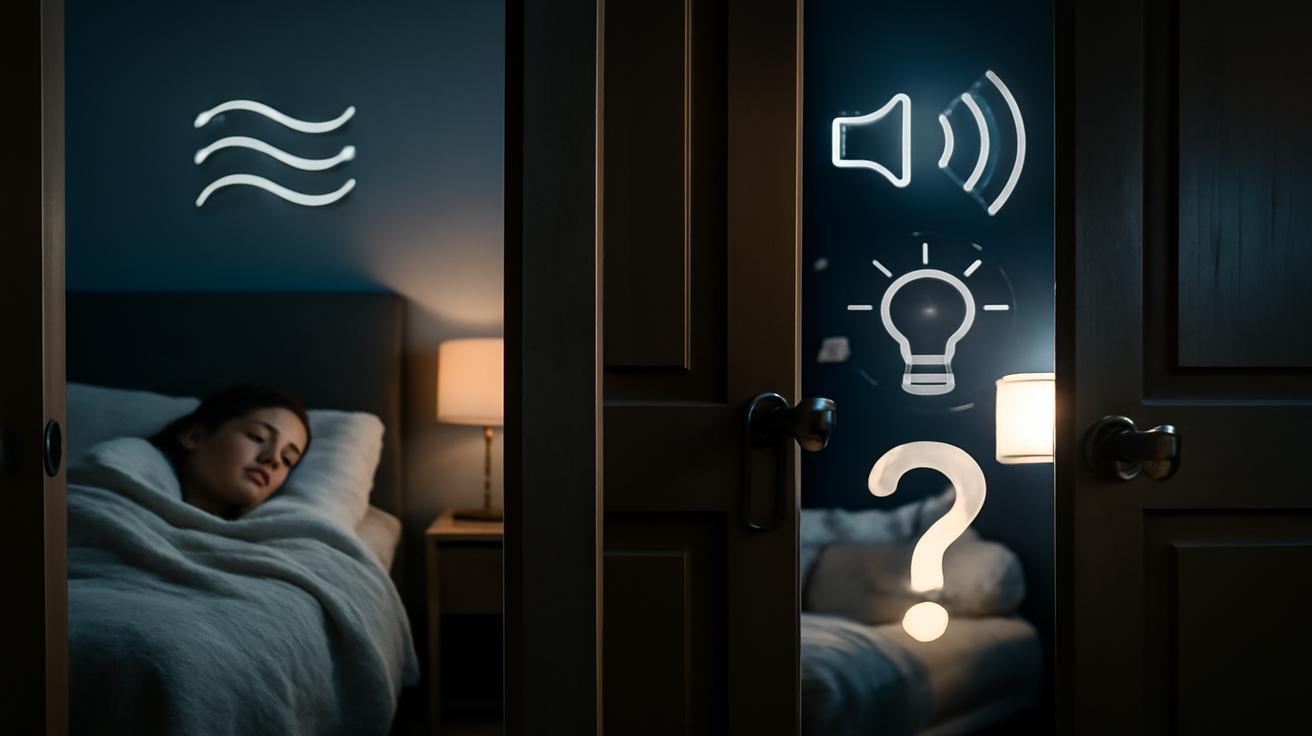
Every evening, millions of people face a seemingly inconsequential decision: should the bedroom door stay open or closed? For many, this nighttime ritual happens without conscious thought, guided by habit or preference. However, emerging conversations among sleep researchers and home environment experts suggest this simple choice carries more weight than most realize. The debate centers on a fundamental tension—improved air quality versus multiple environmental factors that could compromise both security and restful sleep.


The Case for Open Bedroom Doors
The primary argument supporting open bedroom doors hinges on ventilation and air quality. During sleep, the human body continues its metabolic processes, consuming oxygen and producing carbon dioxide. In a sealed bedroom, particularly in modern homes designed for energy efficiency with minimal air leakage, this gas exchange can gradually increase indoor CO2 levels.
Sleep physiologists have observed that elevated carbon dioxide concentrations in sleeping quarters may interfere with sleep architecture—the natural progression through light sleep, deep sleep, and REM stages that constitute a complete sleep cycle. When CO2 levels rise above optimal thresholds, some research suggests sleepers experience more frequent micro-awakenings, reduced time in restorative deep sleep stages, and overall lower sleep quality metrics.
An open bedroom door facilitates passive air circulation between the bedroom and other areas of the home. This natural convection process, especially when combined with open windows, creates a gentle but consistent air exchange. Proponents argue this simple arrangement can meaningfully reduce CO2 buildup without requiring mechanical ventilation systems or energy expenditure.
Additionally, improved air circulation helps regulate temperature and humidity levels. These environmental factors significantly influence sleep quality. Cooler room temperatures around 65-68 degrees Fahrenheit align with the body’s natural temperature drop during sleep onset. Better airflow helps maintain these optimal conditions more consistently throughout the night.
The Countervailing Concerns
While the physiological benefits appear compelling, sleep environment experts and security professionals raise legitimate concerns that complicate this recommendation. The drawbacks of maintaining an open bedroom door extend across multiple dimensions of the sleeping environment and home safety.
Noise pollution represents the most immediate practical concern. An open door allows sound from household activities, external traffic, pets, and other domestic noise sources to penetrate the bedroom. Even light sleepers can manage ambient noise, but people sensitive to acoustic disturbances may find that any nighttime noise disrupts their sleep continuity. Research on noise and sleep indicates that sudden, unexpected sounds trigger arousal responses even in people who don’t consciously wake, fragmenting the sleep cycles that produce restorative benefits.
Light intrusion poses a similar challenge. Modern homes contain various light sources—hallway fixtures, bathroom lights, street lighting visible through windows, electronic device indicators. An open bedroom door eliminates the physical barrier that blocks these light sources. Since melatonin production depends on darkness, exposure to extraneous light can suppress this crucial sleep hormone, making sleep onset slower and less complete.
Security Implications of Bedroom Access
Beyond sleep quality considerations, security experts express concern about the access implications of open bedroom doors. A secured bedroom door presents a physical barrier that buys precious seconds during emergencies. Home security specialists note that closed doors can delay intruders, contain fire spread, reduce smoke inhalation risk, and provide a space where household members can shelter while emergency services respond.
While burglaries represent a statistical rarity in many residential areas, home security agencies recommend closed bedroom doors as a basic protective measure. The psychological comfort of a secured sleeping space also contributes to sleep quality for security-conscious individuals—a benefit that might offset any air quality improvements from keeping the door open.
Fire safety adds another dimension to this consideration. In residential fire scenarios, closed doors significantly slow fire spread and smoke migration into bedrooms, potentially providing critical time for evacuation or rescue. Emergency management organizations emphasize closed bedroom doors as part of comprehensive home fire safety plans, particularly for households with children, elderly members, or individuals with mobility limitations.
Individual Variation and Personalized Solutions
Sleep science increasingly emphasizes that no universal bedroom environment suits everyone equally. Genetic variation affects individual sensitivity to CO2, noise, light, and temperature. Some people naturally exhibit heightened environmental awareness during sleep, while others sleep deeply regardless of surrounding conditions.
Rather than applying blanket recommendations, sleep specialists suggest individuals consider their personal sleep patterns and environmental sensitivities. Lighter sleepers or those in urban environments with significant noise might prioritize door closure for undisturbed sleep. People in quieter settings without acute security concerns might emphasize the ventilation benefits of an open door.
Practical Alternatives and Compromises
Modern solutions offer middle grounds between fully open and completely closed doors. Partial door openings—cracking the door slightly—permit some air exchange while maintaining most of the acoustic and light-blocking benefits of closure. This approach has gained attention as a practical compromise.
Additionally, mechanical solutions address the underlying concern without requiring architectural changes. Quality exhaust fans in bathrooms and kitchens remove moisture and odors. Whole-home ventilation systems, increasingly common in new construction, provide controlled air exchange independent of door positioning. In-room air purifiers and CO2 monitors enable data-driven decisions about ventilation requirements.
Window management offers another alternative. Strategic window opening, particularly in adjacent rooms or hallways, can improve home ventilation without requiring bedroom doors remain open. This approach provides air circulation benefits while maintaining bedroom door security and sound isolation.
The Research Landscape
Scientific investigation into this question remains somewhat limited. While studies confirm elevated CO2 reduces cognitive performance and sleep quality in laboratory settings, research specifically examining typical residential bedroom scenarios and actual impact on sleep quality needs expansion. Most existing studies involve artificially elevated CO2 levels rather than the gradual accumulation in sealed bedrooms.
This research gap means recommendations rest partially on theoretical reasoning and partially on observed patterns. As sleep science evolves, more data on real-world bedroom environments will likely clarify optimal ventilation strategies for diverse populations and housing situations.
Making Your Decision
Choosing whether to keep your bedroom door open ultimately requires weighing personal circumstances. Environmental preferences, household composition, local noise and security conditions, and individual sleep characteristics all factor into the decision.
The most practical approach involves experimentation combined with monitoring. Track sleep quality metrics using subjective assessment or wearable technology while varying door position over several-night periods. This personal data provides more meaningful guidance than general recommendations, allowing you to identify your individual optimal bedroom environment.
Whether you ultimately choose to keep your bedroom door open, closed, or somewhere between depends on your unique sleep needs and home situation. The important recognition is that this simple, habitual choice deserves intentional consideration rather than automatic repetition.










Leave a Comment