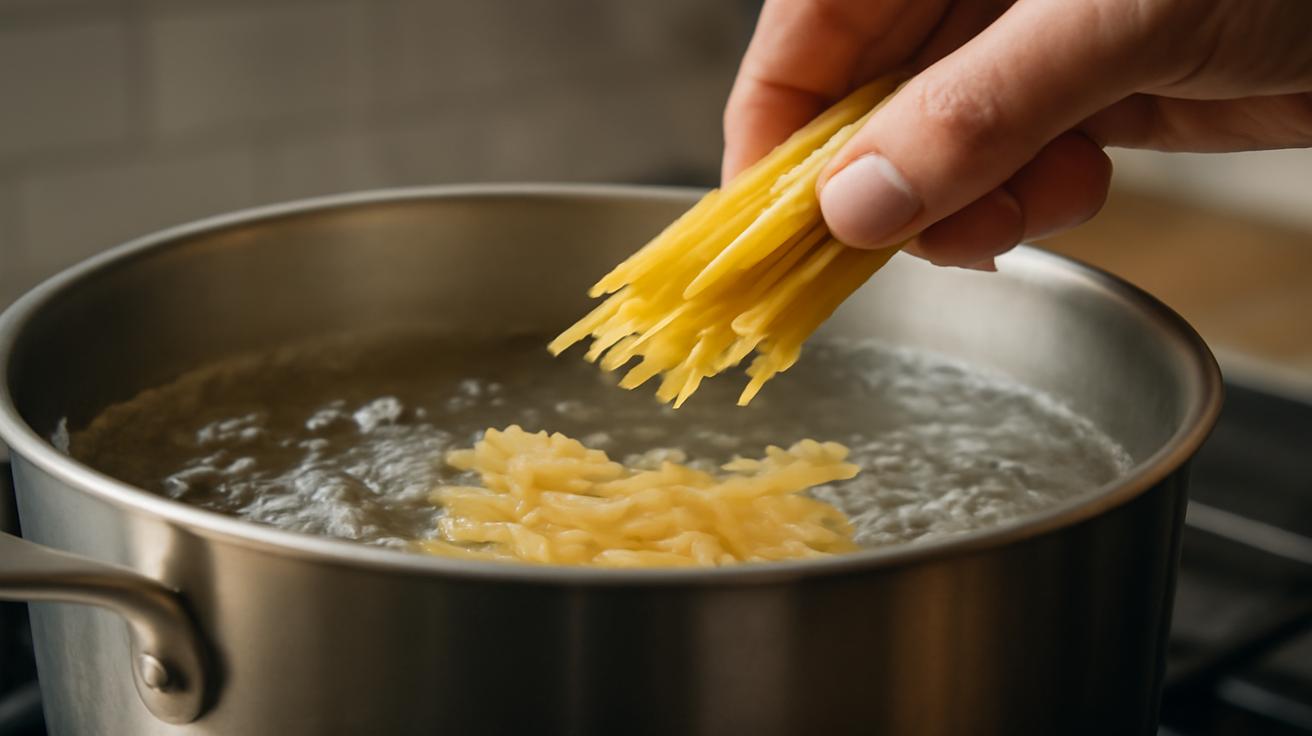
In the heart of Milan’s culinary scene, where tradition meets modern social media influence, chef Roberta has become known for her refreshingly straightforward approach to Italian cooking. Her latest emphasis on pasta spacing—a concept many home cooks overlook—reveals why even simple dishes require thoughtful technique and respect for fundamental cooking principles.
The Milan Kitchen Where Tradition Meets Modern Technique
Roberta’s workspace in Milan is far from the polished, Instagram-perfect kitchens that dominate food influencer culture. On a particularly gray Tuesday afternoon, as the Milanese weather settled into that familiar dampness that seems to define northern Italian winters, Roberta prepared for a cooking demonstration. The city outside her window continued its perpetual symphony—the distinctive whirr of Vespa scooters, the metallic hiss of espresso machines from the café below, the everyday soundtrack of a city that treats food as seriously as it treats fashion.
What makes Roberta distinct among the countless food influencers saturating social media is her willingness to address the most basic cooking methods with the gravity they deserve. While many chefs in her position might focus on elaborate presentations or trendy ingredient combinations, Roberta insists on revisiting the fundamentals. This philosophy particularly manifests in how she approaches one of Italy’s most beloved staples: pasta.
The Overlooked Science Behind Pasta Preparation
}
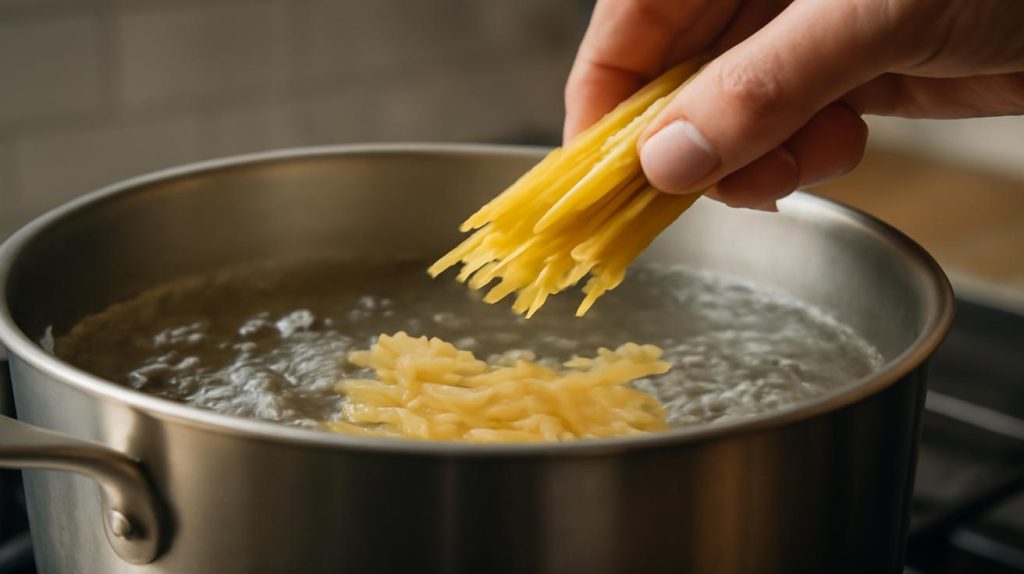
Standing before her stovetop, Roberta’s frown wasn’t born from dissatisfaction—it was the concentrated expression of someone conducting a culinary examination. The pot before her contained boiling water, steam rising in billowing clouds, and yet she appeared far from ready to add pasta. This pause, seemingly unnecessary to the untrained eye, represents the cornerstone of her philosophy: patience in preparation.
“Most people treat pasta water like it’s an inconvenient vessel,” Roberta explained during an interview conducted weeks after her Tuesday kitchen session. “They add pasta too quickly, too much at once, without considering what happens in that pot. They’re not just cooking pasta—they’re creating an environment that will either succeed or fail their entire dish.”
The concept of “space” in pasta cooking refers to something manufacturers and professional chefs have understood for decades, yet home cooks frequently ignore: the amount of water required relative to pasta quantity, and the actual physical space each piece of pasta occupies in the pot. When pasta is crowded in insufficient water, several problematic conditions develop simultaneously. The water temperature drops dramatically when cold pasta hits boiling water, the individual strands stick together as starches release and bond, and the cooking becomes uneven, with some portions overcooked while others remain al dente only in theory.
Roberta’s Spacing Philosophy Explained
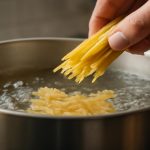
According to Roberta’s methodology, proper pasta cooking requires maintaining a ratio of at least one liter of water per 100 grams of pasta. More importantly, the pasta must be distributed throughout the pot rather than clumped in a compressed mass. She recommends adding pasta gradually, allowing each handful to be submerged and slightly separated before adding more. This creates what she calls “breathing room”—the space necessary for water circulation around each strand or shape.
“When I was a child watching my grandmother prepare pasta, I never once saw her dump an entire package into the pot at once,” Roberta reflected. “She would add it gradually, breaking long pasta and stirring with purpose. She wasn’t being theatrical or unnecessarily precise—she understood that pasta needs space to cook properly. The water needs to move around it, heat needs to reach all surfaces evenly, and the starch needs somewhere to disperse rather than coating each piece with adhesive starch from its neighbors.”
This philosophy extends beyond mere water volume. Roberta emphasizes the importance of continuous, gentle stirring during the first two minutes after pasta enters the water. This isn’t vigorous stirring that breaks the pasta—it’s deliberate movement that ensures individual pieces maintain separation and cook uniformly.
The Cultural Context of Authentic Italian Cooking
Roberta’s emphasis on these foundational techniques reflects a broader trend among Italian chefs who’ve achieved social media prominence through authenticity rather than innovation. While molecular gastronomy and fusion cuisine dominate contemporary culinary conversations, Roberta has built her following by defending traditional methods against the encroachment of convenience-driven shortcuts.
“There’s this misconception that Italian cooking is simple because it uses few ingredients,” Roberta noted. “But simplicity in ingredients demands precision in technique. If you’re only using pasta, water, salt, and perhaps one or two other components, then every single step becomes critical. You cannot hide behind complex flavor profiles or elaborate plating. The pasta itself must be perfectly cooked, and that perfection begins with understanding why space matters.”
Her followers, numbering in the hundreds of thousands across various platforms, have responded enthusiastically to this no-nonsense approach. Comments on her pasta preparation videos frequently include revelations from viewers—messages describing how they’d been unknowingly cooking pasta incorrectly for decades, and how simply implementing the spacing concept transformed their home cooking results.
Practical Application for Home Cooks
Implementing Roberta’s spacing philosophy requires minimal additional effort or investment. Home cooks need only remember three core principles: use abundant water, add pasta gradually rather than all at once, and maintain gentle but consistent stirring during initial cooking. These simple modifications address the mechanical realities of how pasta cooks in water.
Roberta often uses linguistic parallels to help her audience understand the concept. “Pasta needs space the way dancers need a stage,” she explained in one particularly memorable video. “Crowd them together and you lose the beauty of individual movements. Give them space and each piece can express itself fully.”
The Influence of Traditional Methods in Modern Cooking
What distinguishes Roberta’s approach from other culinary educators is her unwillingness to present traditional methods as quaint relics of the past. Instead, she frames them as evidence-based practices that persist because they work. The spacing concept isn’t traditional because it’s old—it’s traditional because generations of Italian cooks discovered through repetition and observation that this method produces superior results.
As she continues to build her platform and influence the cooking habits of millions globally, Roberta remains committed to this philosophy. In a culinary landscape increasingly obsessed with novelty, her insistence on mastering the basics represents a quiet rebellion—one pot, one handful of pasta, and one moment of intentional space at a time.









Leave a Comment