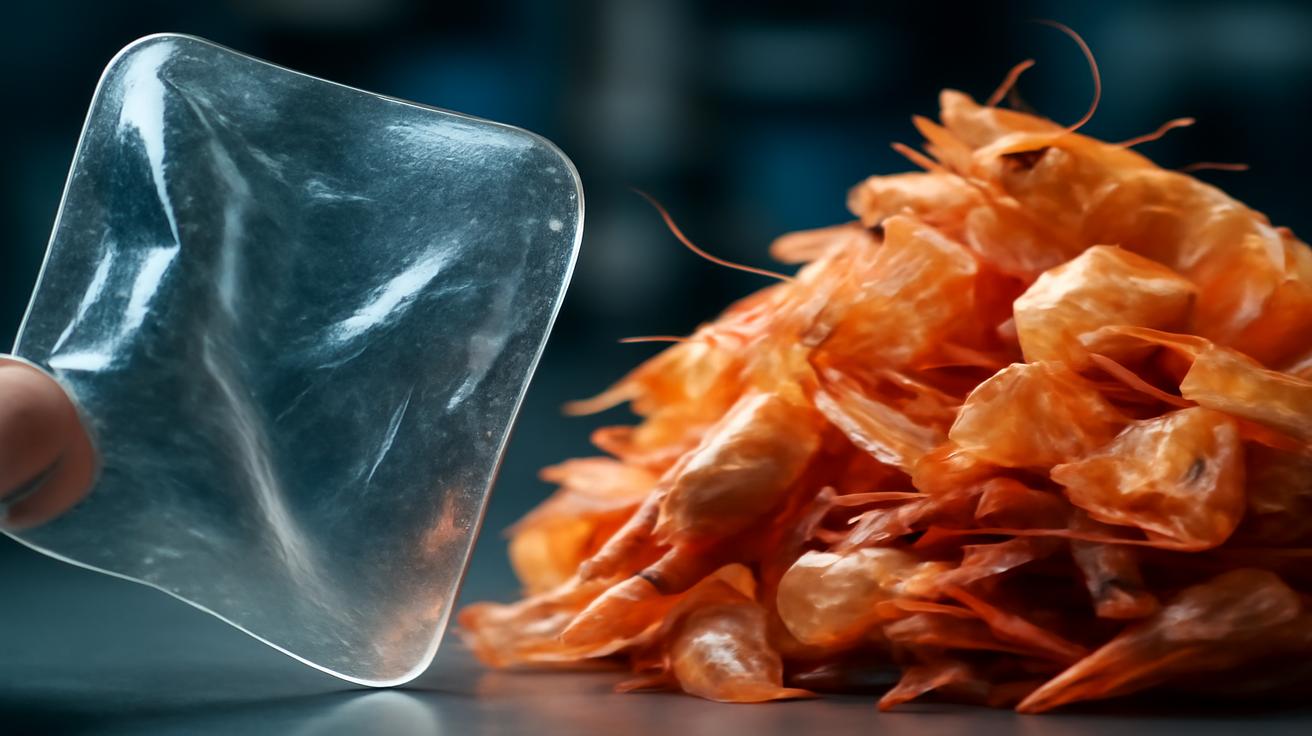
Along the Atlantic-facing coasts of Spain, where fishing vessels return with their daily bounty, a transformation is occurring that could reshape how humanity approaches plastic consumption. What was once considered waste—the discarded shells of prawns destined for dinner tables across Europe—is now being reimagined as a revolutionary material. Spanish scientists have achieved what many thought impossible: creating a fully functional plastic alternative from crustacean byproducts, marking a watershed moment in the quest for sustainable materials.


The Challenge of Plastic Alternatives
For decades, the global community has grappled with an inconvenient truth: our dependence on synthetic plastics has created an environmental crisis of staggering proportions. Millions of tons of plastic waste accumulate in landfills annually, while ocean pollution reaches catastrophic levels. The search for alternatives has yielded mixed results, with many proposed solutions proving economically unfeasible or technically inadequate for widespread adoption.
Traditional biodegradable plastics often require specialized decomposition facilities or degrade too slowly to make a meaningful environmental impact. Compostable options frequently cost significantly more than conventional plastics, making them inaccessible to average consumers and industries operating on tight margins. This technological and economic gap has perpetuated our reliance on petroleum-based polymers, despite growing awareness of their destructive consequences.
The Spanish research team recognized that true innovation required thinking differently about raw materials. Rather than starting from petroleum products or agricultural resources that compete with food production, they looked toward abundant waste streams within existing industries.
The Prawn Shell Advantage
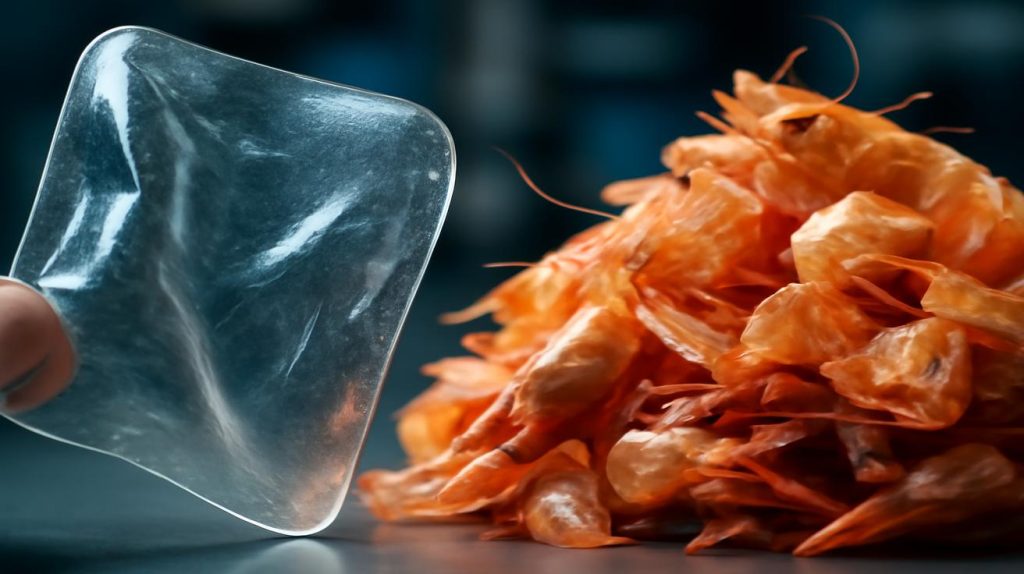
Prawn shells contain chitin and chitosan, complex polymers that nature has perfected over millions of years of evolution. These biopolymers possess remarkable structural properties—they’re strong, flexible, and inherently biodegradable. The challenge wasn’t discovering these properties; it was engineering them into a material that could compete with modern plastics across various applications.
Spain’s fishing industry processes thousands of tons of shellfish annually, generating substantial quantities of shell waste. Rather than treating this byproduct as a disposal problem, researchers at the Instituto de Investigaciones Marinas recognized an opportunity. The abundance of raw material made economic sense; the molecular structure offered technical promise.
The extraction process involves treating prawn shells with specific chemical solutions that isolate and purify the chitin. Through careful refinement and processing, scientists transformed this agricultural waste into usable plastic precursors. What emerged was a material with surprising versatility—capable of being molded, shaped, and processed using existing manufacturing equipment with minimal modifications.
Research Methodology and Development
The research team employed a multidisciplinary approach, combining expertise from marine biology, polymer chemistry, and materials engineering. Initial experiments focused on understanding how different processing temperatures and chemical treatments affected the material’s properties. Researchers conducted extensive testing to determine tensile strength, flexibility, heat resistance, and degradation rates under various environmental conditions.
Laboratory results proved promising. The resulting material displayed structural integrity comparable to conventional plastic in many applications, while maintaining biodegradability in standard composting environments and natural settings. More remarkably, the decomposition timeline proved significantly shorter than most synthetic plastics—degrading to harmless components within months rather than decades.
Scaling the process from laboratory conditions to industrial production presented a distinct challenge. Engineers had to develop systems capable of processing large volumes while maintaining quality consistency. They established protocols for standardizing the extraction process, creating material batches with reliable properties. This standardization proved critical for attracting interest from manufacturers seeking reliable supply chains.
Environmental and Economic Implications
The implications of this breakthrough extend far beyond the laboratory. The fishing industry generates substantial waste currently destined for landfills or incineration. Monetizing this waste stream creates economic incentives for sustainable practices while reducing disposal costs. Processors who once paid to dispose of shells can now view them as valuable raw materials.
From an environmental perspective, the advantages accumulate across multiple dimensions. First, the plastic itself is biodegradable, addressing the persistence problem plaguing conventional polymers. Second, utilizing existing waste eliminates the need for new resource extraction or competing with agricultural land for raw materials. Third, the production process requires less energy and generates fewer greenhouse gas emissions compared to petroleum-based plastic manufacturing.
Lifecycle analysis studies conducted by the research team indicate that prawn shell-derived plastic offers a substantially reduced environmental footprint from production through disposal. The carbon sequestered within the organic material partially offsets processing energy requirements, resulting in a genuinely sustainable production cycle.
Challenges and Future Development
Despite these achievements, significant hurdles remain before widespread commercial adoption becomes reality. Current production costs remain higher than conventional plastics, though economies of scale promise substantial reductions as manufacturing expands. The material’s performance in demanding applications—high-temperature environments, extended UV exposure, or aggressive chemical contact—still requires refinement for certain industrial uses.
Regulatory approval represents another frontier. European environmental standards require extensive documentation and testing before new materials gain official certification for food contact and medical applications. The research team has begun submitting data to regulatory bodies, but the approval timeline typically spans several years.
The Spanish scientists are simultaneously exploring modifications to broaden the material’s applicability. Early experiments with reinforcement strategies suggest the plastic might eventually serve applications currently requiring more durable conventional polymers. Research into additives that enhance specific properties continues, with the goal of creating a family of materials suited to diverse industrial needs.
Industry Response and Scaling Prospects
The announcement has generated significant interest from plastic manufacturers, packaging companies, and consumer goods producers. Several major European firms have expressed willingness to participate in pilot production trials, with some already establishing research partnerships with the Spanish team. These collaborations aim to refine manufacturing processes and test real-world performance across commercial applications.
Investment firms focused on environmental technology have also taken notice, recognizing the commercial potential of a material that simultaneously addresses environmental concerns and generates profits. Preliminary discussions suggest that bringing scaled production online could occur within three to five years, contingent on successful pilot programs and regulatory clearance.
A Model for Sustainable Innovation
Perhaps the most significant aspect of this Spanish breakthrough extends beyond the material itself. The research demonstrates how examining waste streams through an innovative lens can yield solutions to seemingly intractable problems. Rather than relying solely on technological breakthroughs or hoping consumers will change behavior, this approach creates economic value from addressing environmental challenges.
As other industries confront mounting waste management problems, the prawn shell plastic model suggests a template worth replicating. What other byproducts might be transformed into valuable materials? What other waste streams represent untapped resources?
The Spanish researchers have opened a door that many believed remained locked. While significant work remains before prawn shell plastic becomes ubiquitous, the milestone has been achieved: nature’s materials, processed through human ingenuity, offer a genuinely sustainable alternative to the plastics that have defined our modern era. This represents not merely incremental progress, but a fundamental shift in how we might approach the material challenges of our time.









Leave a Comment