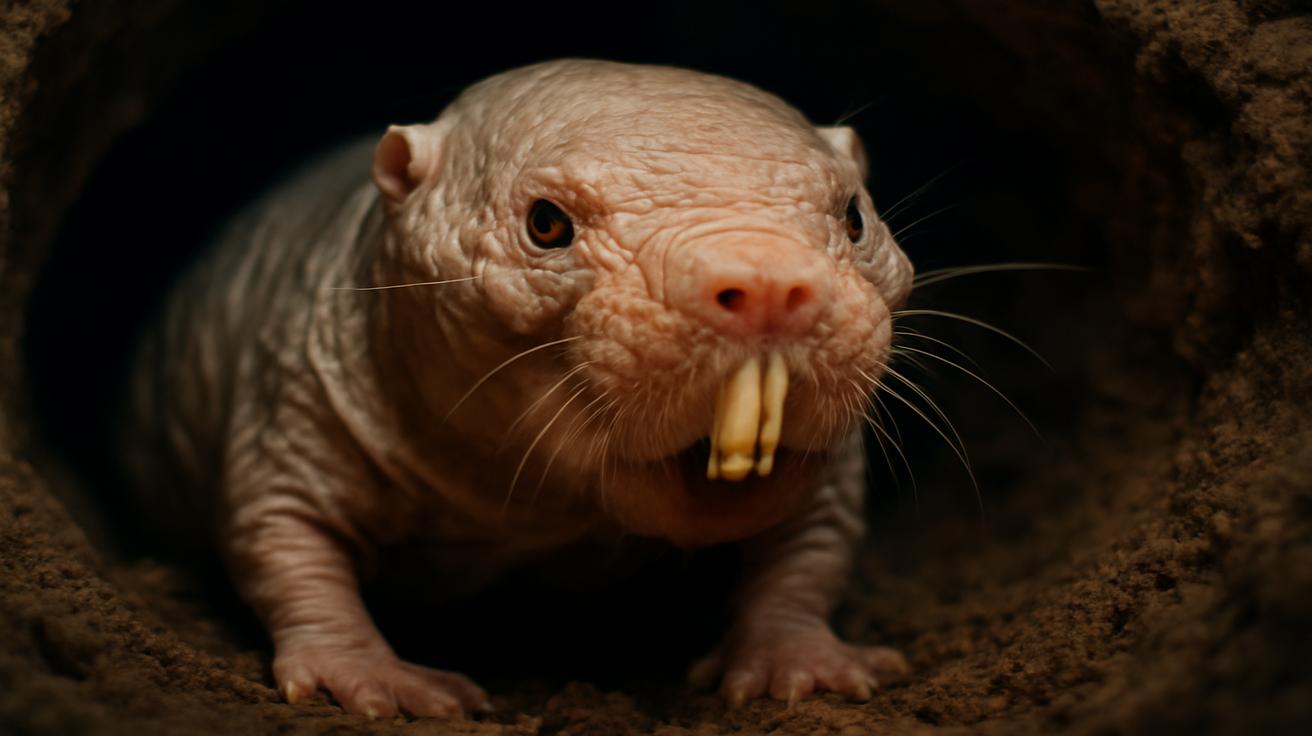
When you first encounter a naked mole rat, your initial reaction might be one of surprise—or perhaps mild revulsion. With its paper-thin, wrinkled gray skin stretched across a bony frame, oversized teeth protruding from its mouth, and a body that seems completely disproportionate, this creature appears to be nature’s architectural mishap. Yet beneath this seemingly unfortunate exterior lies one of the animal kingdom’s most remarkable survival stories, packed with biological innovations that would make any evolutionary biologist sit up and take notice.


The Creature That Defies Conventional Beauty Standards
The naked mole rat, scientifically known as Heterocephalus glaber, is a rodent native to the arid regions of East Africa, particularly in Kenya, Ethiopia, and Somalia. Measuring between three to four inches in length and weighing only about 30 to 50 grams, this diminutive creature looks less like a typical mammal and more like a living science experiment gone slightly wrong.
The animal’s most striking feature is undoubtedly its skin. Unlike other mammals that boast fur coats designed for insulation and protection, the naked mole rat has virtually no hair covering its body. Instead, its skin hangs in loose folds and wrinkles, giving it an appearance that seems perpetually exhausted or aged far beyond its years. Its teeth are perhaps equally alarming—two massive incisors that protrude significantly from its mouth, resembling miniature tusks more suited to a prehistoric creature than a modern rodent.
Despite its aesthetic shortcomings, the naked mole rat has become increasingly popular among scientists and nature enthusiasts worldwide. Why? Because this organism has solved biological puzzles that continue to perplex researchers studying aging, cancer, and extreme environmental adaptation.
Surviving Without a Single Sip: The Water Independence Mystery
Perhaps the most astonishing adaptation of the naked mole rat is its ability to survive indefinitely without drinking water—a feat that seems nearly impossible for a terrestrial mammal. In the scorching deserts and semi-arid regions where these creatures make their homes, water is an extraordinarily precious commodity. Yet the naked mole rat has evolved a physiological solution that eliminates its dependence on drinking entirely.
The secret lies in the naked mole rat’s diet and metabolic processes. These animals are herbivores that feed primarily on tubers and roots—particularly the succulent underground portions of plants that contain substantial water content. By consuming these water-rich plant materials, naked mole rats absorb sufficient moisture to meet their physiological needs. Their bodies have become remarkably efficient at extracting and conserving every precious drop of water they consume.
Additionally, the naked mole rat’s metabolic rate is significantly lower than that of other rodents of comparable size. This reduced metabolism means the animal requires less water for basic bodily functions, allowing it to maintain hydration through diet alone. Their kidneys and urinary systems are also highly specialized, minimizing water loss and ensuring that the minimum amount of moisture is excreted as waste.
This water-independence adaptation is so efficient that researchers have conducted studies observing naked mole rats in laboratory conditions without providing them access to drinking water, and the animals thrived perfectly well. This capability represents millions of years of evolutionary refinement in response to the harsh African environments where these creatures originated.
The Eusocial Structure: A Kingdom Underground
Beyond their physiological marvels, naked mole rats exhibit social behavior that is absolutely unique among mammals. These animals are eusocial—meaning they live in highly organized colonies with a hierarchical structure remarkably similar to that of bees and ants. In fact, naked mole rats are the only known eusocial mammals on Earth, making them scientifically invaluable for understanding social organization.
Within a naked mole rat colony, which can number anywhere from 20 to 300 individuals, there exists a clear caste system. A single dominant female, known as the queen, is the only breeding female in the colony. She rules over male soldiers and workers, who maintain the underground tunnel systems, forage for food, and care for offspring. This hierarchical arrangement allows for extraordinary efficiency and resource allocation within the colony.
The workers are smaller and less developed than soldiers, while the queen is noticeably larger and more robust than other colony members. This size differentiation is partly genetic but also influenced by the queen’s pheromones, which suppress reproductive development and growth in subordinate females. It’s a sophisticated chemical communication system that maintains social order without physical aggression.
Defying Death: Naked Mole Rats and Cancer Resistance
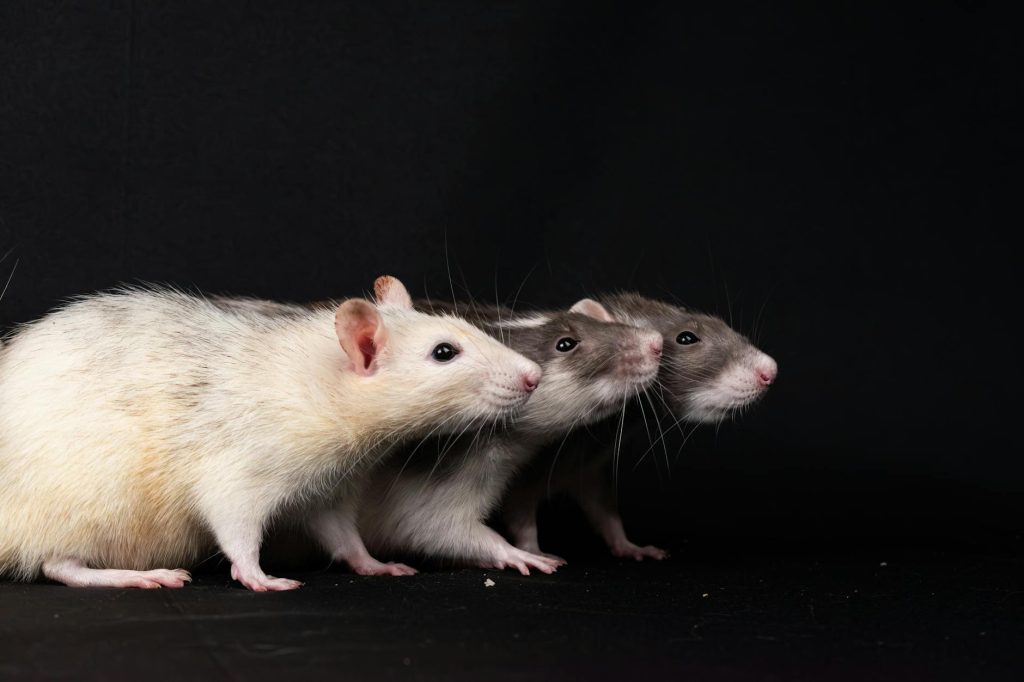
Perhaps the most medically significant discovery about naked mole rats concerns their apparent resistance to cancer. While most mammals, including humans, develop cancerous tumors as they age, naked mole rats rarely, if ever, contract cancer despite living remarkably long lives for rodents—sometimes exceeding 30 years in captivity, compared to the typical 2-3 year lifespan of common laboratory rats.
Scientists have identified several cellular mechanisms that contribute to this cancer resistance. The naked mole rat possesses multiple copies of genes related to tumor suppression, particularly genes similar to p16 and p53 in humans. Additionally, these animals have evolved a unique form of cell death called early contact inhibition, which causes cells to stop dividing when they come into contact with neighboring cells. This prevents the uncontrolled cell multiplication that characterizes cancer.
The naked mole rat also produces exceptionally high-molecular-weight hyaluronic acid in its tissues—a compound that appears to inhibit tumor formation. Researchers studying this rodent have published hundreds of peer-reviewed papers exploring the potential applications of these cancer-resistance mechanisms for human medicine.
Pain Perception and Neurological Uniqueness
Another remarkable characteristic of the naked mole rat is its unusual response to pain stimuli. These animals appear to have significantly reduced sensitivity to certain types of pain, particularly to acidic substances and capsaicin—the compound that makes chili peppers hot. This adaptation likely evolved because naked mole rats frequently burrow through soil that contains acidic compounds, and this reduced sensitivity prevents distraction from their essential tasks.
However, naked mole rats are not completely insensitive to pain. They retain normal responses to temperature extremes and mechanical injury. This selective pain insensitivity represents a fascinating window into how nervous systems can be fine-tuned through evolution to match an animal’s specific environmental challenges.
Conclusion: Beauty in Biological Excellence
The naked mole rat stands as a powerful reminder that biological excellence and evolutionary success cannot be measured by aesthetic appeal. While this wrinkled, seemingly ungainly creature may never win a beauty contest, it has developed a suite of extraordinary adaptations that allow it to thrive where many other animals would perish. From its ability to survive without drinking water to its resistance against cancer and its unprecedented social structure, the naked mole rat represents nature’s remarkable ingenuity.
As researchers continue investigating this unusual animal, discoveries may ultimately benefit human medicine and our understanding of aging, disease, and social organization. Sometimes, it seems, the most important lessons come wrapped in the least attractive packages.










Leave a Comment