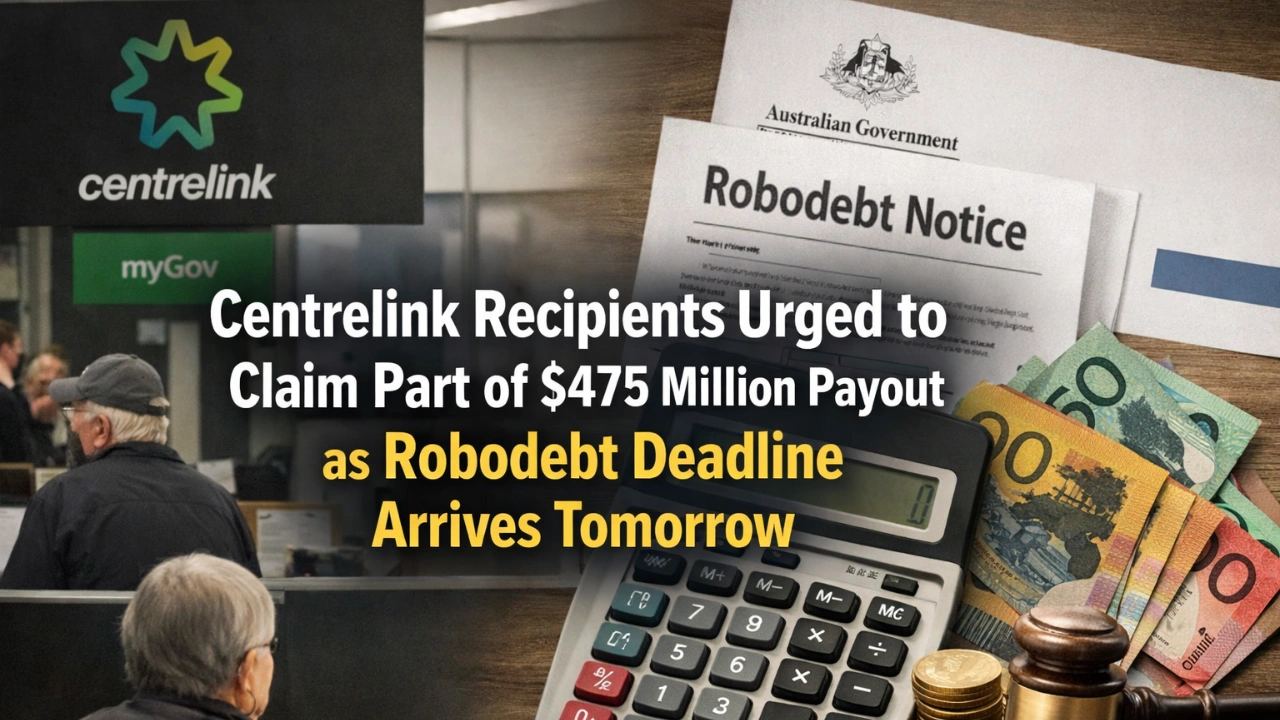
Thousands of Australians have been issued a critical reminder as the deadline for claiming robodebt compensation draws to a close. With less than 24 hours remaining, affected citizens who experienced wrongful debt notices from Centrelink must take action to secure their share of a substantial $475 million settlement fund.


Understanding the Robodebt Controversy
Between 2015 and 2019, Australia’s welfare system became the subject of one of the country’s most contentious policy failures. The automated debt-raising system, commonly referred to as “robodebt,” sent hundreds of thousands of debt notices to Centrelink recipients, many of whom were told they owed significant sums of money to the government.
The system used an algorithmic approach to identify perceived discrepancies between income information held by the Australian Taxation Office and payments made by Centrelink. However, the methodology was fundamentally flawed. The system failed to account for timing differences in how income was reported and when welfare payments were processed, leading to numerous false positives and erroneous debt calculations.
Recipients faced extraordinary stress and anxiety upon receiving these notices. Many individuals made payments based on debt claims that were later found to be completely invalid. The human impact of this automated system cannot be overstated, with reports indicating connections to mental health crises and financial hardship across the affected population.

The Legal Challenge and Settlement Outcome
Public outcry and legal challenges eventually forced the government to acknowledge the systemic failures of the robodebt scheme. A landmark class action lawsuit, led by affected recipients and their legal representatives, successfully demonstrated that the automated system had caused widespread injustice and financial harm to vulnerable Australians.
In acknowledgment of this failure, the government agreed to establish a substantial compensation fund. The $475 million settlement represents one of Australia’s largest payouts for administrative error and represents recognition of the genuine harm caused to innocent citizens who had done nothing wrong.
This settlement provides an opportunity for victims of the scheme to recover funds they paid out in response to invalid debt notices, as well as compensation for the stress, anxiety, and financial hardship they endured during their encounters with the robodebt system.
Who Qualifies for the Robodebt Compensation
Not everyone who received a Centrelink payment during the robodebt period automatically qualifies for compensation. The settlement specifically covers individuals who received incorrect debt notices and either paid money in response or experienced financial detriment as a result.
To be eligible, you must have received an automated debt notice between July 2015 and November 2019. Additionally, you must have either made a payment toward the alleged debt or suffered demonstrable financial hardship as a consequence of receiving the notice. This includes situations where individuals were unable to access other financial services or experienced employment difficulties due to the debt notification.
The claim process recognizes various categories of impact. Some claimants may recover actual amounts paid toward invalid debts, while others may be compensated for the broader financial and personal consequences of the system’s failures.
How to Submit Your Compensation Claim
With the deadline rapidly approaching, eligible recipients need to understand the claims process and take immediate action. The compensation scheme operates through an established claims management system designed to process applications efficiently.
To lodge a claim, individuals should gather documentation supporting their experience with robodebt. This includes the original debt notices received, records of any payments made in response, bank statements demonstrating financial transactions, and any correspondence with Centrelink or government agencies regarding the disputed debts.
The claims process can be completed online through the dedicated settlement portal. The system guides applicants through a series of questions designed to establish eligibility and calculate appropriate compensation amounts. Applicants must provide personal identification, details about the debts they received, and information about the financial impact they experienced.
For those who find the online process challenging, alternative submission methods are available. Some applicants may prefer to submit claims through postal services or engage with community legal centers that offer assistance with the application process.
Why the Deadline Matters
The imminent deadline is not arbitrary. Settlement agreements require clear closure dates to enable efficient processing and fund distribution. Missing the deadline means forfeiting the opportunity to claim compensation entirely. There is no provision for late submissions once the deadline passes, making immediate action essential for those who wish to pursue their entitlements.
The government and managing authorities have been publicizing this deadline extensively, but community surveys suggest many affected individuals remain unaware of the claims process. People who experienced robodebt trauma years ago may have put the matter behind them and not realize that compensation is still available.
Support Services and Assistance
Recognizing that some claimants may struggle with the application process, various support services have been established. Community legal centers across Australia offer free assistance to eligible individuals. These organizations can help applicants understand their rights, gather necessary documentation, and complete claim forms accurately.</n
Additionally, financial counseling services are available to help claimants understand the implications of their compensation and manage any received funds wisely. Mental health services are also being promoted, acknowledging that revisiting the robodebt experience can trigger emotional responses for some individuals.
Next Steps and Future Considerations
After the deadline passes, the focus will shift to processing submitted claims. The managing authorities have indicated they will work systematically through applications, with assessments based on the information and documentation provided. Successful claimants can expect compensation to be distributed over a specified timeframe, with most payments anticipated within several months of claim approval.
For those who cannot meet the deadline due to unforeseen circumstances, legal advice should be sought immediately to explore any possible options, though alternatives are limited once the deadline passes.
Lessons and Systemic Reform
Beyond the immediate compensation matter, the robodebt scandal has prompted broader discussion about government accountability and the dangers of over-reliance on automated systems without adequate human oversight. Policy reforms have been discussed to prevent similar failures in the future, including mandatory human review of automated compliance decisions and improved transparency in algorithmic decision-making.
The settlement and compensation process represents not just financial redress, but an acknowledgment that government systems must be designed with safeguards to protect vulnerable citizens from administrative errors.
Take Action Today
For anyone affected by robodebt, the message is clear: the time to act is now. With the deadline arriving tomorrow, procrastination is no longer an option. Whether you believe you have a strong case or are uncertain about your eligibility, submitting a claim ensures your situation is properly assessed.
Visit the official settlement portal immediately, gather your documentation, and complete your application. If you need assistance, contact a community legal center today. Your robodebt compensation claim deserves immediate attention.











Leave a Comment