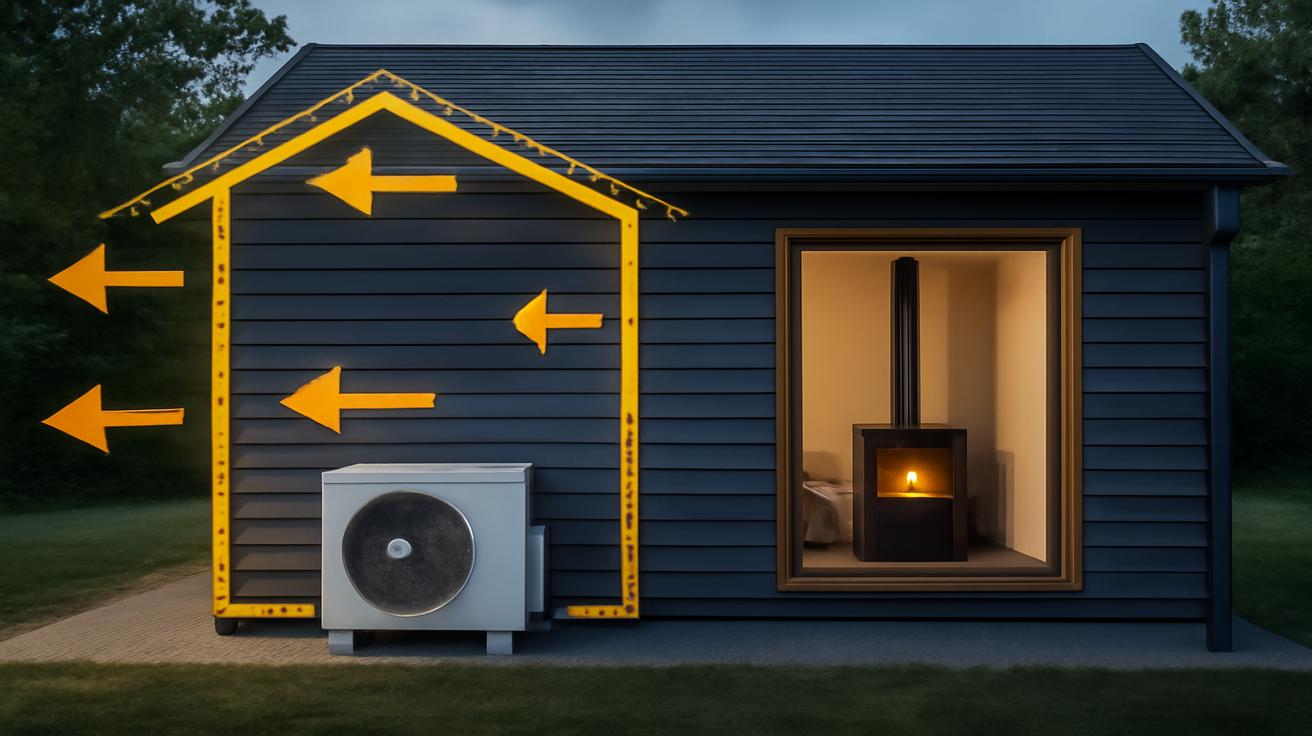
The winter that changed everything began quietly, with a thin, needling wind that found its way through every crack and crevice of an aging Victorian home in Yorkshire. By November, the occupants made a decision that would have seemed radical just five years earlier: they disconnected their cast-iron radiators and installed a modern air-source heat pump system. What happened next surprised them entirely. Their heating bills dropped by nearly forty percent, and the house remained consistently warmer throughout the season. This household’s experience reflects a broader scientific consensus that has only recently crystallized: heat pumps represent the most efficient and economical way to heat contemporary homes.


The Scientific Evidence is Now Undeniable
Recent comprehensive studies conducted by leading energy research institutions across Europe and North America have definitively established that heat pump technology outperforms all other residential heating methods in terms of both efficiency and long-term cost-effectiveness. A landmark report published by the International Energy Agency analyzed heating systems across multiple climate zones, comparing traditional boiler systems, electric resistance heating, and various heat pump configurations.
The findings were striking. Air-source heat pumps demonstrated efficiency ratings of 300 to 400 percent, meaning they deliver three to four units of heating for every unit of electricity consumed. Ground-source heat pumps performed even better, reaching efficiency ratings above 400 percent in many installations. By contrast, conventional gas boilers typically achieve efficiency ratings around 90 percent, while electric resistance heating operates at barely 100 percent efficiency.
What these numbers mean in practical terms is revolutionary: households switching from conventional radiator systems to modern heat pumps typically reduce their heating costs by 30 to 50 percent, depending on their previous system’s age and condition. Over a twenty-year period, the savings can amount to tens of thousands of pounds or dollars.
How Heat Pumps Achieve Superior Efficiency
Understanding why heat pumps are so efficient requires examining how they fundamentally differ from traditional heating systems. Conventional boilers generate heat by burning fuel—whether gas, oil, or solid fuel—creating warmth that then travels through radiators and pipes to heat living spaces. This approach has dominated for over a century, but it operates on an outdated thermodynamic principle.
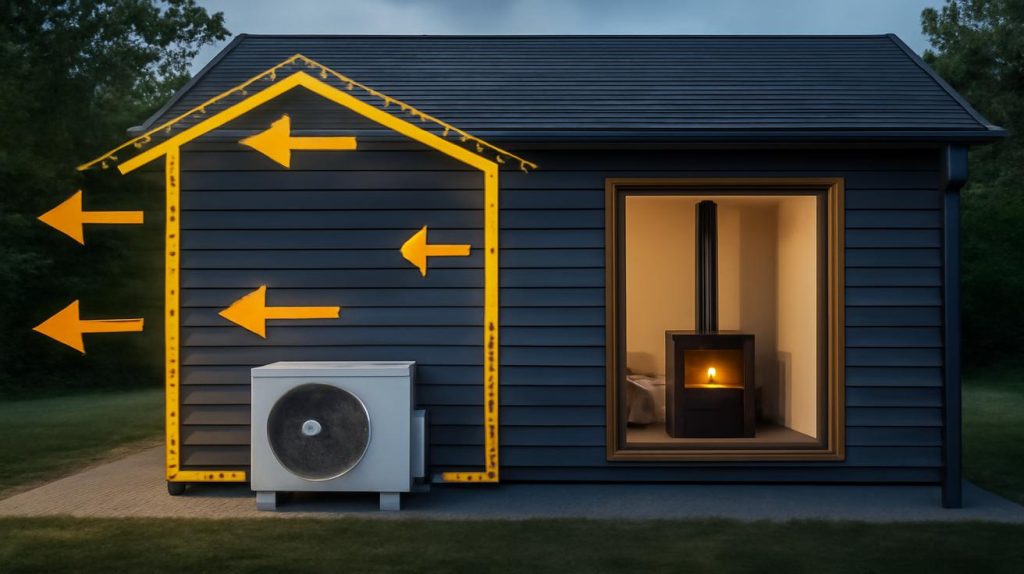
Heat pumps, by contrast, don’t generate heat at all. Instead, they extract it from the surrounding environment. Even in freezing temperatures, the air, ground, or water contains thermal energy. Heat pump systems use refrigerant cycles to capture this ambient energy and concentrate it, raising its temperature to levels suitable for home heating.
During winter months, an air-source heat pump extracts warmth from cold air outside the home. A ground-source heat pump draws heat from the relatively stable temperature maintained deep beneath the earth’s surface. In both cases, the system transfers this captured energy inside, where it warms the home through radiators, underfloor heating, or warm-air distribution systems.
The electrical energy required to power the compressor that concentrates this heat is substantially less than the heating energy ultimately delivered to the home. This efficiency advantage becomes more pronounced in milder climates, though modern heat pumps perform remarkably well even in regions with harsh winters.
The Economics Tell a Compelling Story
The financial case for heat pump installation has strengthened considerably as technology has matured and manufacturing has scaled up globally. Installation costs have fallen by approximately thirty percent over the past seven years, while government incentive programs in numerous countries now subsidize heat pump adoption.
Consider a typical detached home requiring approximately 15,000 kWh of heating annually. With a conventional gas boiler costing roughly £1,800 per year to operate, switching to a heat pump system reduces that figure to between £900 and £1,200. Annual savings of £600 to £900 might not seem dramatic until you project them forward. Over fifteen years, cumulative savings exceed £9,000 to £13,500.
Installation costs have also become more reasonable. An air-source heat pump system for an average home now typically costs between £8,000 and £13,000, though this varies by region and property characteristics. Many households recoup their initial investment within eight to ten years through energy savings alone. After that point, every year of operation delivers pure financial benefit.
For properties with suitable ground conditions, ground-source heat pumps offer even greater long-term savings, though their higher installation costs mean the payback period extends to twelve to fifteen years. However, ground-source systems often last forty years or more, meaning two or even three decades of operation beyond the investment recovery point.
Environmental Benefits Align with Economic Ones
Beyond personal financial considerations, heat pump adoption addresses urgent environmental imperatives. Most electricity grids are transitioning toward renewable energy sources. As wind, solar, and hydroelectric power constitute increasing percentages of grid supply, the environmental advantages of electrically-powered heat pumps continue to improve.
A heat pump installation made today in a region where renewables provide thirty percent of electricity will become progressively cleaner as that renewable percentage increases. By contrast, a gas boiler installed today will produce carbon emissions throughout its operational lifespan, regardless of future energy transitions.
Over a twenty-year period, a household heating with a modern heat pump typically produces between 40 and 60 percent fewer carbon emissions than one heated with gas, even accounting for current grid composition in most developed nations. As grids decarbonize further, this advantage expands dramatically.
Addressing the Remaining Skepticism
Despite compelling evidence, some homeowners remain hesitant about heat pump adoption. Common concerns include performance in extremely cold weather, noise generation, and reliability. Research has addressed each of these objections thoroughly.
Modern cold-climate heat pumps maintain effective operation down to -15°C or colder, though their efficiency gradually decreases in extreme cold. When temperatures plummet far below this threshold, backup heating systems activate, ensuring consistent comfort. Manufacturers have engineered increasingly quiet systems, with many modern units operating at noise levels barely perceptible to residents.
Regarding reliability, heat pump systems now boast impressive track records. Many units operate for fifteen to twenty years with minimal maintenance beyond annual filter changes. Component failure rates are remarkably low, and repair costs, when needed, typically run lower than those for traditional boiler maintenance.
The Path Forward
The scientific consensus supporting heat pump heating represents a fundamental shift in how societies approach residential comfort. What was once considered a specialized alternative technology has become the evidence-based recommendation of energy professionals worldwide.
As older radiator systems fail and homeowners contemplate replacement options, the choice has become increasingly straightforward. Heat pumps offer superior efficiency, lower operating costs, improved performance, and genuine environmental benefits. The winter that changed everything for that Yorkshire household may soon become the norm across countless homes, as occupants recognize that modern science has finally settled the heating question.










Leave a Comment